






















The end of the nineteenth century and the early years of the twentieth century were marked by the development of an international Art Nouveau style, characterized by sinuous lines, floral and vegetable motifs, and soft evanescent coloration. The Art Nouveau style was an eclectic one, bringing together elements of Japanese art, motifs of ancient cultures, and natural forms. The glass objects of this style were elegant in outline, although often deliberately distorted, with pale or iridescent surfaces. A favored device of the style was to imitate the iridescent surface seen on ancient glass that had been buried. Much of the Art Nouveau glass produced during the years of its greatest popularity had been generically termed “art glass.” Art glass was intended for decorative purposes and relied for its effect on carefully chosen color combinations and innovative techniques.
France produced a number of outstanding exponents of the Art Nouveau style; among the most celebrated was Emile Galle (1846-1904). In the United States, Louis Comfort Tiffany (1843-1933) was the most noted exponent of this style, producing a great variety of glass forms and surfaces, which were widely copied in their time and are highly prized today. Tiffany was a brilliant designer, successfully combining ancient Egyptian, Japanese, and Persian motifs.
The Art Nouveau style was a major force in the decorative arts from 1895 until 1915, although its influence continued throughout the mid-1920’s. It was eventually to be overtaken by a new school of thought known as Functionalism that had been present since the turn of the century. At first restricted to a small avant-garde group of architects and designers, Functionalism emerged as the dominant influence upon designers after the First World War. The basic tenet of the movement-that function should determine form-was not a new concept. Soon a distinct aesthetic code evolved: from should be simple, surfaces plain, and any ornament should be based on geometric relationships. This new design concept, coupled with the sharp postwar reactions to the styles and conventions of the preceding decades, created an entirely new public taste which caused Art Nouveau types of glass to fall out of favor. The new taste demanded dramatic effects of contrast, stark outline and complex textural surfaces.
What does paragraph 1 mainly discuss?
The end of the nineteenth century and the early years of the twentieth century were marked by the development of an international Art Nouveau style, characterized by sinuous lines, floral and vegetable motifs, and soft evanescent coloration. The Art Nouveau style was an eclectic one, bringing together elements of Japanese art, motifs of ancient cultures, and natural forms. The glass objects of this style were elegant in outline, although often deliberately distorted, with pale or iridescent surfaces. A favored device of the style was to imitate the iridescent surface seen on ancient glass that had been buried. Much of the Art Nouveau glass produced during the years of its greatest popularity had been generically termed “art glass.” Art glass was intended for decorative purposes and relied for its effect on carefully chosen color combinations and innovative techniques.
France produced a number of outstanding exponents of the Art Nouveau style; among the most celebrated was Emile Galle (1846-1904). In the United States, Louis Comfort Tiffany (1843-1933) was the most noted exponent of this style, producing a great variety of glass forms and surfaces, which were widely copied in their time and are highly prized today. Tiffany was a brilliant designer, successfully combining ancient Egyptian, Japanese, and Persian motifs.
The Art Nouveau style was a major force in the decorative arts from 1895 until 1915, although its influence continued throughout the mid-1920’s. It was eventually to be overtaken by a new school of thought known as Functionalism that had been present since the turn of the century. At first restricted to a small avant-garde group of architects and designers, Functionalism emerged as the dominant influence upon designers after the First World War. The basic tenet of the movement-that function should determine form-was not a new concept. Soon a distinct aesthetic code evolved: from should be simple, surfaces plain, and any ornament should be based on geometric relationships. This new design concept, coupled with the sharp postwar reactions to the styles and conventions of the preceding decades, created an entirely new public taste which caused Art Nouveau types of glass to fall out of favor. The new taste demanded dramatic effects of contrast, stark outline and complex textural surfaces.
What does paragraph 1 mainly discuss?
Quảng cáo
Trả lời:
 Giải bởi Vietjack
Đáp án đúng là B
Phương pháp giải
Đọc hiểu suy luận đoạn 1
Lời giải
Đoạn 1 chủ yếu thảo luận về điều gì?
A. Các yếu tố thiết kế theo phong cách Art Nouveau
B. Sự phổ biến của phong cách Art Nouveau
C. Kỹ thuật sản xuất kính nghệ thuật
D. Kết hợp màu sắc điển hình của phong cách Art Nouveau
Thông tin: The end of the nineteenth century and the early years of the twentieth century were marked by the development of an international Art Nouveau style, characterized by sinuous lines, floral and vegetable motifs, and soft evanescent coloration.
Tạm dịch: Cuối thế kỷ XIX và đầu thế kỷ XX đánh dấu sự phát triển của phong cách nghệ thuật mới quốc tế, đặc trưng bởi những đường nét uốn lượn, họa tiết hoa và rau, cùng màu sắc nhẹ nhàng, phai nhạt.
Câu hỏi cùng đoạn
Câu 2:
What does the word “one” in the first paragraph refer to?
Giải bởi Vietjack
Đáp án đúng là C
Phương pháp giải
Lời giải
Từ “one” trong đoạn văn đầu tiên ám chỉ điều gì?
A. thế kỷ.
B. phát triển.
C. phong cách.
D. màu sắc.
Thông tin: The Art Nouveau style was an eclectic one, bringing together elements of Japanese art, motifs of ancient cultures, and natural forms.
Tạm dịch: Phong cách Art Nouveau là phong cách pha trộn, kết hợp các yếu tố nghệ thuật Nhật Bản, họa tiết của nền văn hóa cổ đại và hình dạng tự nhiên.
Câu 3:
What is the word “noted” in paragraph 2 closest meaning to?
What is the word “noted” in paragraph 2 closest meaning to?
Giải bởi Vietjack
Đáp án đúng là A
Phương pháp giải
“noted” (đáng chú ý)
Lời giải
Từ “noted” (đáng chú ý) trong đoạn 2 có nghĩa gần nhất là gì?
A. distinguished (adj) nổi bật
B. notorious (adj) khét tiếng, tai tiếng
C. talented (adj) tài năng
D. influential (adj) có ảnh hưởng
=> noted = distinguished
Thông tin: In the United States, Louis Comfort Tiffany (1843-1933) was the most noted exponent of this style, producing a great variety of glass forms and surfaces, which were widely copied in their time and are highly prized today.
Tạm dịch: Tại Hoa Kỳ, Louis Comfort Tiffany (1843-1933) là người tiêu biểu nhất cho phong cách này, sản xuất nhiều loại hình dạng và bề mặt thủy tinh, được sao chép rộng rãi vào thời gian của ông và được đánh giá rất cao hiện tại.
Câu 4:
What does the author mean by stating that “function should determine form”?
What does the author mean by stating that “function should determine form”?
Giải bởi Vietjack
Đáp án đúng là B
Phương pháp giải
Đọc hiểu tìm thông tin đoạn cuối
Lời giải
Tác giả có ý gì khi nói rằng “chức năng nên xác định hình thức”?
A. Một vật hữu ích không nên trông hấp dẫn.
B. Mục đích của một vật nên ảnh hưởng đến hình thức của nó.
C. Thiết kế của một vật được coi là quan trọng hơn chức năng của nó.
D. Hình thức của một vật không nên bao gồm các yếu tố trang trí.
Thông tin: The basic tenet of the movement-that function should determine form-was not a new concept. Soon a distinct aesthetic code evolved: form should be simple, surfaces plain, and any ornament should be based on geometric relationships.
Tạm dịch: Nguyên lý cơ bản của phong trào này - chức năng phải quyết định hình thức - không phải là một khái niệm mới. Chẳng bao lâu sau, một quy tắc thẩm mỹ riêng biệt đã phát triển: cấu trúc phải đơn giản, bề mặt phải trơn tru và bất kỳ đồ trang trí nào cũng phải dựa trên các mối quan hệ hình học.
Câu 5:
Which of the following statements can be inferred from the third paragraph about Functionalism?
Which of the following statements can be inferred from the third paragraph about Functionalism?
Giải bởi Vietjack
Đáp án đúng là B
Phương pháp giải
Đọc hiểu tìm thông tin đoạn cuối
Lời giải
Câu nào sau đây có thể suy ra được từ đoạn thứ ba về Chủ nghĩa chức năng?
A. Khái niệm thiết kế của chủ nghĩa này tránh các hình dạng hình học.
B. Chủ nghĩa này bắt đầu ở quy mô nhỏ và sau đó lan rộng dần dần.
C. Chủ nghĩa này là một thế lực chính trong nghệ thuật trang trí trước Thế chiến thứ nhất.
D. Chủ nghĩa này không hấp dẫn đối với tất cả các kiến trúc sư và nhà thiết kế.
Thông tin:
- At first restricted to a small avant-garde group of architects and designers, Functionalism emerged as the dominant influence upon designers after the First World War. => B đúng, C, D sai
- Soon a distinct aesthetic code evolved: form should be simple, surfaces plain, and any ornament should be based on geometric relationships. => A sai
Tạm dịch:
- Ban đầu chỉ giới hạn trong một nhóm nhỏ các kiến trúc sư và nhà thiết kế tiên phong, Chủ nghĩa chức năng nổi lên như một ảnh hưởng chủ đạo đối với các nhà thiết kế sau Thế chiến thứ nhất.
- Chẳng bao lâu sau, một quy tắc thẩm mỹ riêng biệt đã phát triển: hình thức phải đơn giản, bề mặt phải trơn tru và bất kỳ đồ trang trí nào cũng phải dựa trên các mối quan hệ hình học.
Hot: Giáo án năng lực số, PPT AI khởi động lớp 1-12 (Update 2026) (chỉ từ 150k). Tải ngay
CÂU HỎI HOT CÙNG CHỦ ĐỀ
Câu 1
Lời giải
Đáp án đúng là C
Phương pháp giải
Xác suất có điều kiện - dùng sơ đồ hình cây.
Lời giải
Gọi A là biến cố "thứ ba Hoa đi học bằng xe đạp"
B là biến cố " thứ tư Hoa đi học bằng xe đạp"
Ta vẽ sơ đồ hình cây như sau
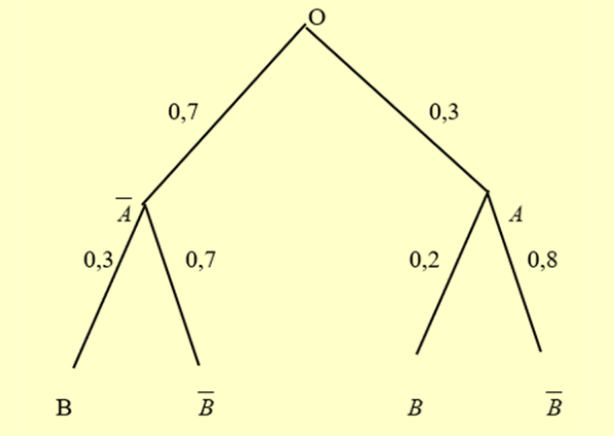
Có hai nhánh cây đi tới \(B\) là \(OAB\) và \(O\overline A B\).
Vậy \(P\left( B \right) = 0,7.0,3 + 0,2.0,3 = 0,27\)
Lời giải
Đáp án đúng là "1150"
Phương pháp giải
- Tính khối lượng aspirin trong 2,7 triệu viên nén.
- Tính khối lượng aspirin lý thuyết tổng hợp được để suy ra số mol salicylic acid cần dùng.
Lời giải
Số mol lý thuyết của aspirin được điều chế ra là: \(\frac{{{{500.10}^{ - 3}}.2,{{7.10}^6}}}{{180}}:90\% = \frac{{25000}}{3}\;{\rm{mol}}\)
Phản ứng xảy ra theo tỉ lệ mol 1 : 1 nên số mol salicylic acid cần dùng bằng số mol aspirin lý thuyết.
\( \Rightarrow {m_{{\rm{salicylic acid }}}} = \frac{{25000}}{3}.138 = 1150000{\rm{gam}} = 1150\;{\rm{kg}}\)
Vậy số cần điền là 1150.
Lời giải
Bạn cần đăng ký gói VIP ( giá chỉ từ 250K ) để làm bài, xem đáp án và lời giải chi tiết không giới hạn.
Câu 4
Lời giải
Bạn cần đăng ký gói VIP ( giá chỉ từ 250K ) để làm bài, xem đáp án và lời giải chi tiết không giới hạn.
Câu 5
Lời giải
Bạn cần đăng ký gói VIP ( giá chỉ từ 250K ) để làm bài, xem đáp án và lời giải chi tiết không giới hạn.
Câu 6
Lời giải
Bạn cần đăng ký gói VIP ( giá chỉ từ 250K ) để làm bài, xem đáp án và lời giải chi tiết không giới hạn.
Câu 7
Lời giải
Bạn cần đăng ký gói VIP ( giá chỉ từ 250K ) để làm bài, xem đáp án và lời giải chi tiết không giới hạn.
 Nhắn tin Zalo
 Hỏi bài tập