






















Advocates of the laws and journalists who cover the issue often neglect to ask what will replace plastic bags and what the environmental impact of that replacement will be. People still need bags and use them in various ways in their daily life. And the most common substitute, paper bags, may be just as bad or worse, depending on the environmental problem you are most concerned about.
That is leading to a split in the anti-bag movement. Some bills, like in Massachusetts, try to reduce the use of paper bags as well as plastic, but still favour paper. Others, like in New York City, treat all single-use bags equally. Even then, the question remains as to whether single-use bags are necessarily always worse than reusable ones.
Studies of bags' environmental impacts over their life cycle have reached widely varying conclusions. Some are funded by plastic industry groups, like the ironically named American Progressive Bag Alliance. Even studies conducted with the purest of intentions depend on any number of assumptions. How many plastic bags are replaced by one cotton tote bag? If a plastic bag is reused in the home as the garbage bag in a bathroom waste bin, does that reduce its footprint by eliminating the need for another small plastic garbage bag?
If your chief concern is climate change, things get even muddier. One of the most comprehensive research papers on the environmental impact of bags, published in 2007 by an Australian state government agency, found that paper bags have a higher carbon footprint than plastiC. That is primarily because more energy is required to produce and transport paper bags.
"People look at paper and say it's degradable, therefore it's much better for the environment, but it's not in terms of climate change impact," says David Tyler, a professor of chemistry at the University of Oregon who has examined the research on the environmental impact of bag use. The reasons for paper's higher carbon footprint are complex but can mostly be understood as stemming from the fact that paper bags are much thicker than plastic bags. "Very broadly, carbon footprints are proportional to mass of an object," says Tyler. For example, because paper bags take up so much more space, more trucks are needed to ship paper bags to a store than to ship plastic bags.
(Adapted from https://www.wired.com/)
Which of the following best serves as the title for the article?
Advocates of the laws and journalists who cover the issue often neglect to ask what will replace plastic bags and what the environmental impact of that replacement will be. People still need bags and use them in various ways in their daily life. And the most common substitute, paper bags, may be just as bad or worse, depending on the environmental problem you are most concerned about.
That is leading to a split in the anti-bag movement. Some bills, like in Massachusetts, try to reduce the use of paper bags as well as plastic, but still favour paper. Others, like in New York City, treat all single-use bags equally. Even then, the question remains as to whether single-use bags are necessarily always worse than reusable ones.
Studies of bags' environmental impacts over their life cycle have reached widely varying conclusions. Some are funded by plastic industry groups, like the ironically named American Progressive Bag Alliance. Even studies conducted with the purest of intentions depend on any number of assumptions. How many plastic bags are replaced by one cotton tote bag? If a plastic bag is reused in the home as the garbage bag in a bathroom waste bin, does that reduce its footprint by eliminating the need for another small plastic garbage bag?
If your chief concern is climate change, things get even muddier. One of the most comprehensive research papers on the environmental impact of bags, published in 2007 by an Australian state government agency, found that paper bags have a higher carbon footprint than plastiC. That is primarily because more energy is required to produce and transport paper bags.
"People look at paper and say it's degradable, therefore it's much better for the environment, but it's not in terms of climate change impact," says David Tyler, a professor of chemistry at the University of Oregon who has examined the research on the environmental impact of bag use. The reasons for paper's higher carbon footprint are complex but can mostly be understood as stemming from the fact that paper bags are much thicker than plastic bags. "Very broadly, carbon footprints are proportional to mass of an object," says Tyler. For example, because paper bags take up so much more space, more trucks are needed to ship paper bags to a store than to ship plastic bags.
(Adapted from https://www.wired.com/)
Which of the following best serves as the title for the article?
Quảng cáo
Trả lời:
 Giải bởi Vietjack
Đáp án đúng là B
Phương pháp giải
Đọc hiểu toàn bài
Lời giải
Đâu có thể là tiêu đề hay nhất cho đoạn văn?
A. Mọi người nghĩ gì về túi giấy
B. Nhựa có thực sự tệ hơn giấy không?
C. Hoạt động của Liên minh túi tiến bộ của Mỹ
D. Túi giấy là một thay thế tốt cho túi nhựa.
Cả đoạn văn nói về những nghi ngờ rằng việc dùng những chiếc túi nhựa có gây hại hơn sử dụng túi giấy hay không, ở đây tác giả giải thích và phân tích về quá trình sản xuất và vận chuyển.
Câu hỏi cùng đoạn
Câu 2:
What does the word “them” in paragraph 1 refer to?
What does the word “them” in paragraph 1 refer to?
Giải bởi Vietjack
Đáp án đúng là A
Phương pháp giải
Thông tin: Advocates of the laws and journalists who cover the issue often neglect to ask what will replace plastic bags and what the environmental impact of that replacement will be. People still need bags and use them in various ways in their daily life.
Lời giải
Từ “them” trong đoạn 1 ám chỉ điều gì?
A. túi nhựa
B. túi giấy
C. con người
D. tác động
Thông tin: Advocates of the laws and journalists who cover the issue often neglect to ask what will replace plastic bags and what the environmental impact of that replacement will be. People still need bags and use them in various ways in their daily life.
Tạm dịch: Những người ủng hộ luật pháp và các nhà báo đưa tin về vấn đề này thường không hỏi điều gì sẽ thay thế túi nhựa và tác động của việc thay thế đó đối với môi trường là gì. Mọi người vẫn cần túi và sử dụng chúng theo nhiều cách khác nhau trong cuộc sống hàng ngày.
Câu 3:
What is one difference between the anti-bag bills in Massachusetts and New York City?
What is one difference between the anti-bag bills in Massachusetts and New York City?
D. Massachusetts bans both plastic and paper bags entirely, whereas New York City has no such restrictions.
Giải bởi Vietjack
Đáp án đúng là A
Phương pháp giải
Đọc hiểu tìm thông tin đoạn 2
Lời giải
Một điểm khác biệt giữa các dự luật chống túi ở Massachusetts và Thành phố New York là gì?
A. Massachusetts ưu tiên túi giấy, trong khi Thành phố New York quản lý tất cả các loại túi dùng một lần theo cùng một cách.
B. Massachusetts chỉ hạn chế túi giấy, trong khi Thành phố New York chỉ hạn chế túi nhựa.
C. Massachusetts cho phép tất cả các loại túi dùng một lần, nhưng Thành phố New York chỉ cho phép túi tái sử dụng.
D. Massachusetts cấm hoàn toàn cả túi nhựa và túi giấy, trong khi Thành phố New York không có hạn chế nào như vậy.
Thông tin: Some bills, like in Massachusetts, try to reduce the use of paper bags as well as plastic, but still favour paper. Others, like in New York City, treat all single-use bags equally. Even then, the question remains as to whether single-use bags are necessarily always worse than reusable ones.
Tạm dịch: Một số dự luật, như ở Massachusetts, cố gắng giảm việc sử dụng túi giấy cũng như túi nhựa, nhưng vẫn ủng hộ giấy. Những dự luật khác, như ở Thành phố New York, đối xử với tất cả các loại túi dùng một lần như nhau. Ngay cả khi đó, câu hỏi vẫn còn là liệu túi dùng một lần có nhất thiết luôn tệ hơn túi tái sử dụng hay không.
Câu 4:
What is the main idea of the third paragraph?
Giải bởi Vietjack
Đáp án đúng là D
Phương pháp giải
Đọc hiểu suy luận đoạn 3
Lời giải
Ý chính của đoạn văn thứ ba là gì?
A. Các nghiên cứu đều đồng ý rằng túi giấy là lựa chọn tốt nhất.
B. Túi tote bằng vải cotton luôn tốt hơn cho môi trường.
C. Túi nhựa không bao giờ có thể tái sử dụng theo cách thân thiện với môi trường.
D. Các nghiên cứu về tác động của túi khác nhau do các giả định.
Thông tin: Studies of bags' environmental impacts over their life cycle have reached widely varying conclusions. […] If a plastic bag is reused in the home as the garbage bag in a bathroom waste bin, does that reduce its footprint by eliminating the need for another small plastic garbage bag?
Tạm dịch: Các nghiên cứu về tác động của túi đến môi trường trong suốt vòng đời của chúng đã đưa ra nhiều kết luận khác nhau. […] Nếu một chiếc túi nhựa được tái sử dụng trong nhà làm túi đựng rác trong thùng rác phòng tắm, liệu điều đó có làm giảm dấu chân của nó bằng cách loại bỏ nhu cầu sử dụng một túi đựng rác nhựa nhỏ khác không?
Câu 5:
Why might paper bags have a higher carbon footprint than plastic bags?
Giải bởi Vietjack
Đáp án đúng là B
Phương pháp giải
Đọc hiểu tìm thông tin đoạn cuối
Lời giải
A. Túi giấy khó vận chuyển.
B. Túi giấy dày hơn nhiều so với túi nhựa.
C. Túi giấy chiếm ít không gian.
D. Túi giấy dễ bị rách.
Thông tin: The reasons for paper’s higher carbon footprint are complex, but can mostly be understood as stemming from the fact that paper bags are much thicker than plastic bags.
Tạm dịch: Lý do khiến lượng khí thải carbon cao hơn của giấy rất phức tạp nhưng hầu hết có thể được hiểu là xuất phát từ thực tế là túi giấy dày hơn nhiều so với túi nhựa.
Hot: Giáo án năng lực số, PPT AI khởi động lớp 1-12 (Update 2026) (chỉ từ 150k). Tải ngay
CÂU HỎI HOT CÙNG CHỦ ĐỀ
Câu 1
Lời giải
Đáp án đúng là B
Phương pháp giải
Lời giải
Hiện tượng quan sát được khi cho vào propyne là thu được kết tủa vàng:

Lời giải
Đáp án đúng là "10"
Phương pháp giải
- Thành phần trong đinh sắt gồm sắt nguyên chất và gỉ sắt và cả hai đều phản ứng với dung dịch H2SO4 loãng và đều chuyển hóa hoàn toàn về muối sắt sulfate vì H2SO4 dùng dư.
- Khi cho dung dịch BaCl2 dư vào thì dung dịch X thì có kết tủa BaSO4 được sinh ra.
- Nhỏ từ từ dung dịch KMnO4 0,02M vào 5,00 mL dung dịch X thì muối sắt(II) sulfate.
Lời giải
+) nBaSO4 = 0,0021 ⟹ nH2SO4 pư = 0,0021:2 = 0,00105
+) nKMnO4 = 1,8.10-4
2KMnO4 + 10.FeSO4 + 8.H2SO4 ⟶ 5.Fe2(SO4)3 + 2MnSO4 + K2SO4 + 8.H2O
1,8.10-4 ⟶ 9.10-4
+) BTNT S: nH2SO4 = nFeSO4 + 3.nFe2(SO4)3 ⟹ nFe2(SO4)3 = 5.10-5
⟹ nFe bị oxi hóa thành Fe2O3 = 2.5.10-5 = 10-4
⟹ ntổng số mol Fe = nFeSO4 + 2.nFe2(SO4)3 = 10-3
⟹ %Fe = (10-4/10-3).100% = 10%
Câu 3

Lời giải
Bạn cần đăng ký gói VIP ( giá chỉ từ 250K ) để làm bài, xem đáp án và lời giải chi tiết không giới hạn.
Câu 4
Lời giải
Bạn cần đăng ký gói VIP ( giá chỉ từ 250K ) để làm bài, xem đáp án và lời giải chi tiết không giới hạn.
Câu 5
Lời giải
Bạn cần đăng ký gói VIP ( giá chỉ từ 250K ) để làm bài, xem đáp án và lời giải chi tiết không giới hạn.
Lời giải
Bạn cần đăng ký gói VIP ( giá chỉ từ 250K ) để làm bài, xem đáp án và lời giải chi tiết không giới hạn.
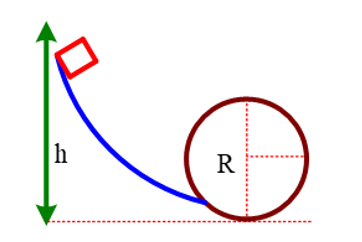
Lời giải
Bạn cần đăng ký gói VIP ( giá chỉ từ 250K ) để làm bài, xem đáp án và lời giải chi tiết không giới hạn.
 Nhắn tin Zalo
 Hỏi bài tập