Read the passage and mark the letter A, B, C or D on your answer sheet to indicate the best answer to each of the following questions.
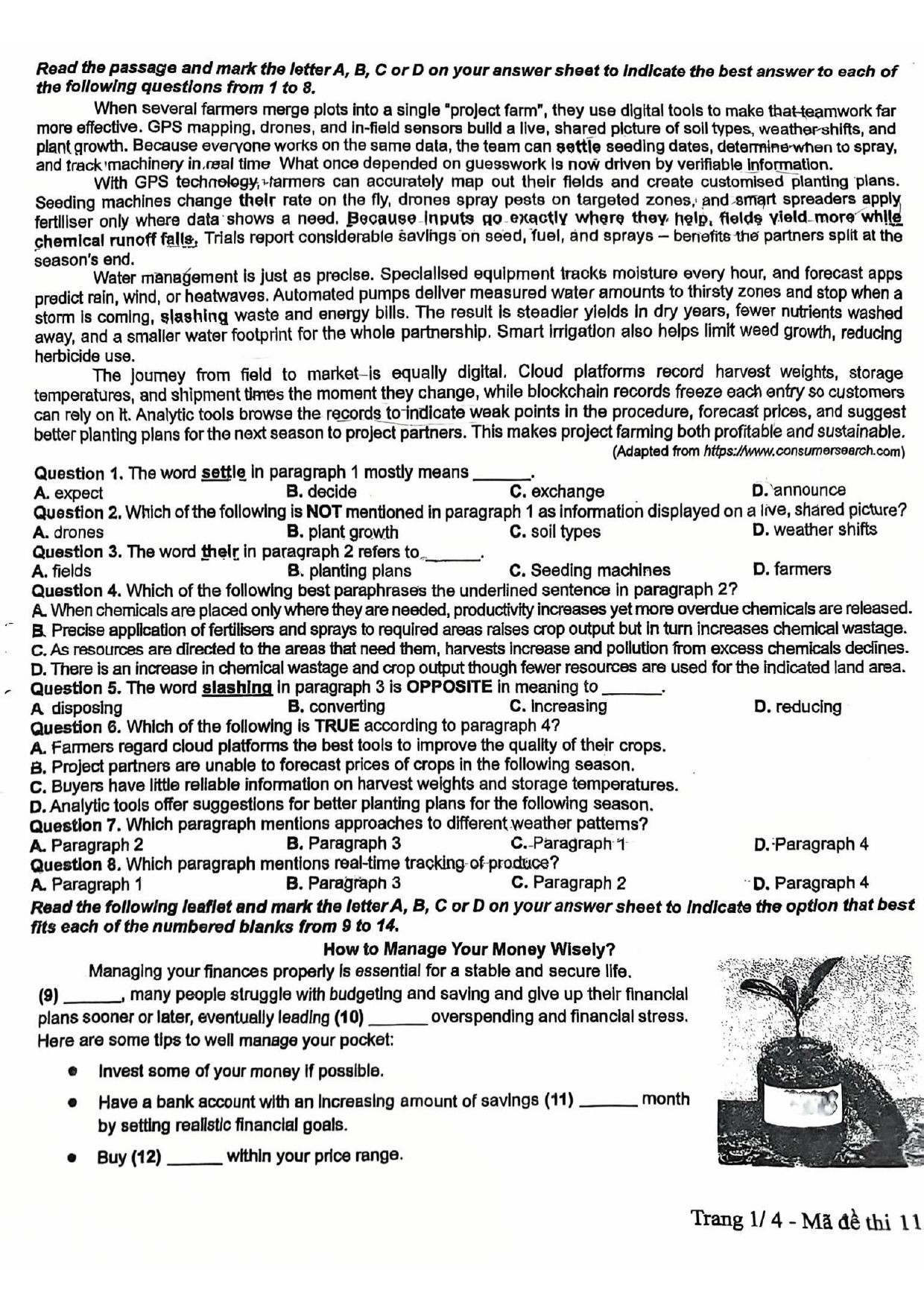
The concept of integrated ecotourism, where local communities, conservationists, and travel agencies collaborate to protect biodiversity while hosting visitors, has gained significant traction. Modern technology keeps this delicate balance on track. Advanced tools such as satellite monitoring, mobile applications, and AI-driven management systems are used to optimize sustainable travel practices. Additionally, real-time data on wildlife movements and trail conditions enables managers to accelerate the decision-making process that maximizes visitor experience while minimizing environmental impact.
GIS and remote sensing allow park rangers and tour operators to precisely map out sensitive ecological zones and create customized trekking routes. This ensures that human foot traffic is directed away from vulnerable habitats based on seasonal breeding patterns and soil erosion data. By avoiding “over-tourism” in fragile areas, communities can maintain their natural capital for the long term. Smart sensors and acoustic monitoring provide advance warnings of illegal activities like poaching or logging, allowing authorities to intercede without disturbing the entire forest. This, therefore, helps curb habitat destruction and save costs for every stakeholder involved in the project.
Technology also plays a vital role in optimizing resource consumption for sustainable lodging. Specialized IoT (Internet of Things) devices report energy and water usage hour by hour, while smart grids manage renewable energy from solar or wind sources. Automated waste management systems track the footprint of each eco-lodge and suggest reductions in single-use materials. This cuts operational costs and protects local watersheds while keeping the ecosystem healthy. In remote, pristine environments, such efficiency keeps ecotourism projects economically viable without compromising the landscape.
The digital trail continues throughout the entire traveler’s journey. Cloud platforms let eco-guides, transport providers, and local artisans input visitor numbers, carbon offset credits, and feedback the moment they are generated, while blockchain records ensure the transparency of “green” certifications so travelers can trust them. Analytic tools combine years of data to forecast seasonal trends, spot conservation opportunities, and mark weak points in the tourist workflow. This allows ecotourism planners to anticipate market demand, exploit resource allocation, and plan for potential climate challenges.
Adapted from: https://ecotourism.org/what-is-ecotourism/
Question 1. Which of the following is NOT mentioned in paragraph 1 as a factor contributing to the optimization of sustainable travel?
A. The immediate accessibility of data regarding wildlife and trail conditions.
B. The implementation of carbon tax policies to discourage frequent traveling.
C. The collaboration between local communities and conservationists.
D. The use of satellite monitoring and AI-driven management.
Question 2. The word “delicate” in paragraph 1 can be best replaced by ____________.
A. subtle
B. flimsy
C. precarious
D. intricate
Question 3. The word “intercede” in paragraph 2 is OPPOSITE in meaning to ____________.
A. arbitrate
B. mediate
C. acquiesce
D. intervene
Question 4. The word “This” in paragraph 3 refers to ____________.
A. reporting energy and water usage
B. managing automated waste systems
C. tracking footprints and suggesting reductions in single-use materials
D. managing renewable energy
Question 5. Which of the following best paraphrases the underlined sentence in paragraph 3?
“In remote, pristine environments, such efficiency keeps ecotourism projects economically viable without compromising the landscape.”
A. Ecotourism projects in isolated areas are cheap to run but they often damage the local scenery.
B. High efficiency allows tourism in untouched areas to be profitable while still protecting nature.
C. To save the environment, remote tourism projects must accept that they will not make any profit.
D. Pristine landscapes are the only places where ecotourism projects can save money effectively.



























 Nhắn tin Zalo
 Hỏi bài tập