






















Many of the most damaging and life-threating types of weather-torrential rains, severe thunderstorms, and tornadoes-begin quickly, strike suddenly, and dissipate rapidly, devastating small regions while leaving neighboring areas untouched. One such event, a tornado, struck the northeastern section of Edmonton, Alberta, in July 1987. Total damages from the tornado exceeded $250 million, the highest ever for any Canadian storm. Conventional computer models of the atmosphere have limited value in predicting short-live local storms like the Edmonton tornado, because the available weather data are generally not detailed enough to allow computers to discern the subtle atmospheric changes that precede these storms. In most nations, for example, weather balloon observations are taken just once every twelve hours at locations typically separated by hundreds of miles. With such limited data, conventional forecasting models do a much better job predicting general weather conditions over large regions than they do forecasting specific local events.
Until recently, the observation-intensive approach needed for accurate, very short range forecasts, or “Nowcasts”, was not feasible. The cost of equipping and operating many thousands of conventional weather stations was prohibitively high, and the difficulties involved in rapidly collecting and processing the raw weather data from such a network were insurmountable. Fortunately, scientific and technological advances have overcome most of these problems. Radar systems, automated weather instruments, and satellites are all capable of making detailed, nearly continuous observation over large regions at a relatively low cost. Communications satellites can transmit data around the world cheaply and instantaneously, and modern computers can quickly compile and analyzing this large volume of weather information. Meteorologists and computer scientists now work together to design computer programs and video equipment capable of transforming raw weather data into words, symbols, and vivid graphic displays that forecasters can interpret easily and quickly. As meteorologists have begun using these new technologies in weather forecasting offices, Nowcasting is becoming a reality.
Many of the most damaging and life-threating types of weather-torrential rains, severe thunderstorms, and tornadoes-begin quickly, strike suddenly, and dissipate rapidly, devastating small regions while leaving neighboring areas untouched. One such event, a tornado, struck the northeastern section of Edmonton, Alberta, in July 1987. Total damages from the tornado exceeded $250 million, the highest ever for any Canadian storm. Conventional computer models of the atmosphere have limited value in predicting short-live local storms like the Edmonton tornado, because the available weather data are generally not detailed enough to allow computers to discern the subtle atmospheric changes that precede these storms. In most nations, for example, weather balloon observations are taken just once every twelve hours at locations typically separated by hundreds of miles. With such limited data, conventional forecasting models do a much better job predicting general weather conditions over large regions than they do forecasting specific local events.
Until recently, the observation-intensive approach needed for accurate, very short range forecasts, or “Nowcasts”, was not feasible. The cost of equipping and operating many thousands of conventional weather stations was prohibitively high, and the difficulties involved in rapidly collecting and processing the raw weather data from such a network were insurmountable. Fortunately, scientific and technological advances have overcome most of these problems. Radar systems, automated weather instruments, and satellites are all capable of making detailed, nearly continuous observation over large regions at a relatively low cost. Communications satellites can transmit data around the world cheaply and instantaneously, and modern computers can quickly compile and analyzing this large volume of weather information. Meteorologists and computer scientists now work together to design computer programs and video equipment capable of transforming raw weather data into words, symbols, and vivid graphic displays that forecasters can interpret easily and quickly. As meteorologists have begun using these new technologies in weather forecasting offices, Nowcasting is becoming a reality.
What does the passage mainly discuss?
Quảng cáo
Trả lời:
 Giải bởi Vietjack
Đáp án đúng là C
Phương pháp giải
Đọc hiểu
Lời giải
Đoạn văn chủ yếu thảo luận là gì?
A. Máy tính và thời tiết
B. Những cơn bão nguy hiểm
C. Dự báo thời tiết
D. Vệ tinh
Bài viết chủ yếu thảo luận về việc dự báo thời tiết.
Câu hỏi cùng đoạn
Câu 2:
What does the word “they” refer to?
Giải bởi Vietjack
Đáp án đúng là A
Phương pháp giải
Thông tin: With such limited data, conventional forecasting models do a much better job predicting general weather conditions over large regions than they do forecasting specific local events.
Lời giải
Từ “họ” ám chỉ điều gì?
A. mô hình
B. điều kiện
C. khu vực
D. sự kiện
Thông tin: With such limited data, conventional forecasting models do a much better job predicting general weather conditions over large regions than they do forecasting specific local events.
Tạm dịch: Với dữ liệu hạn chế như vậy, các mô hình dự báo thông thường thực hiện công việc dự đoán điều kiện thời tiết chung trên các khu vực rộng lớn tốt hơn nhiều so với việc dự báo các sự kiện cụ thể ở địa phương.
Câu 3:
Which of the following is NOT mentioned as an advance in short-range weather forecasting?
Which of the following is NOT mentioned as an advance in short-range weather forecasting?
Giải bởi Vietjack
Đáp án đúng là A
Phương pháp giải
Thông tin:
Until recently, the observation - intensive approach needed for accurate, very short - range forecasts, or "Nowcasts," was not feasible. Fortunately, scientific and technological advances have overcome most of these problems. Radar systems, automated weather instruments, and satellites are all capable of making detailed, nearly continuous observation over large regions at a relatively low cost.
Lời giải
Thông tin:
Until recently, the observation - intensive approach needed for accurate, very short - range forecasts, or "Nowcasts," was not feasible. Fortunately, scientific and technological advances have overcome most of these problems. Radar systems, automated weather instruments, and satellites are all capable of making detailed, nearly continuous observation over large regions at a relatively low cost.
Tạm dịch:
Cho đến gần đây, phương pháp quan sát chuyên sâu cần thiết cho các dự báo chính xác, phạm vi rất ngắn hoặc "Nowcast", không khả thi. May mắn thay, những tiến bộ khoa học kỹ thuật đã khắc phục được hầu hết những vấn đề này. Các hệ thống radar, công cụ thời tiết tự động và vệ tinh đều có khả năng quan sát chi tiết, gần như liên tục trên các khu vực rộng lớn với chi phí tương đối thấp.
Câu 4:
Which of the following best paraphrase this sentence: “With such limited data, conventional forecasting models do a much better job predicting general weather conditions over large regions than they do forecasting specific local events.”
Which of the following best paraphrase this sentence: “With such limited data, conventional forecasting models do a much better job predicting general weather conditions over large regions than they do forecasting specific local events.”
Giải bởi Vietjack
Đáp án đúng là A
Phương pháp giải
Dịch nghĩa đáp án – Từ vựng
Lời giải
Xét các đáp án: “With such limited data, conventional forecasting models do a much better job predicting general weather conditions over large regions than they do forecasting specific local events.”
(Với dữ liệu hạn chế như vậy, các mô hình dự báo thông thường có thể dự đoán tốt hơn nhiều về điều kiện thời tiết chung trên các khu vực rộng lớn so với dự báo các hiện tượng cục bộ cụ thể.)
Câu 5:
With which of the following statements is the author most likely to agree?
With which of the following statements is the author most likely to agree?
Giải bởi Vietjack
Đáp án đúng là D
Phương pháp giải
Thông tin: As meteorologists have begun using these new technologies in weather forecasting offices, Nowcasting is becoming reality.
Lời giải
Tác giả có thể đồng ý với nhận định nào sau đây nhất?
A. Vệ tinh viễn thông có thể dự đoán thời tiết khắc nghiệt.
B. Các nhà khí tượng học nên chuẩn hóa các chương trình máy tính.
C. Phương pháp quan sát chuyên sâu không còn hữu ích nữa.
D. Dự báo thời tiết ngày càng chính xác hơn.
Thông tin: As meteorologists have begun using these new technologies in weather forecasting offices, Nowcasting is becoming reality.
Tạm dịch: Khi những nhà thiên văn học bắt đầu sử dụng những công nghệ mới này trong những cơ quan dự báo thời tiết, Nowcasting đang trở thành hiện thực.
=> Như vậy có thể thấy tác giả có cái nhìn lạc quan về độ chính xác của dự báo thời tiết trong tương lai.
Hot: Giáo án năng lực số, PPT AI khởi động lớp 1-12 (Update 2026) (chỉ từ 150k). Tải ngay
CÂU HỎI HOT CÙNG CHỦ ĐỀ
Câu 1
Lời giải
Đáp án đúng là A
Phương pháp giải
Vận dụng lý thuyết về mô hình động học phân tử chất khí
Lời giải
Bình xịt khử trùng: Khí bên trong bình được nén dưới áp suất cao. Khi ta ấn nút, van mở, khí
thoát ra ngoài, thể tích khí tăng. Áp suất khí giảm, tạo ra lực đẩy giúp phun dung dịch khử trùng.
Lời giải
Đáp án đúng là C
Phương pháp giải
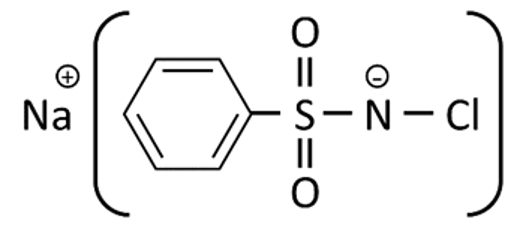
Tính khối lượng chloramine cần để khử khuẩn cho bể nước có dung tích 2,5m3 rồi tình số viên chloamine B cần dùng.
Lời giải
Để khử khuẩn bể nước có dung tích là 2,5m3 cần khối lượng chloramine là: \(\frac{{2,{{5.10}^3}}}{{1000}}.10 = 25{\rm{gam}}\)
Môi viên nén có chứa 250mg chloramine B nên số viên chloramine B cần là: \(\frac{{{{25.10}^3}}}{{250}} = 100\) viên.
Lời giải
Bạn cần đăng ký gói VIP ( giá chỉ từ 250K ) để làm bài, xem đáp án và lời giải chi tiết không giới hạn.
Lời giải
Bạn cần đăng ký gói VIP ( giá chỉ từ 250K ) để làm bài, xem đáp án và lời giải chi tiết không giới hạn.
Câu 5
Lời giải
Bạn cần đăng ký gói VIP ( giá chỉ từ 250K ) để làm bài, xem đáp án và lời giải chi tiết không giới hạn.
Câu 6
Lời giải
Bạn cần đăng ký gói VIP ( giá chỉ từ 250K ) để làm bài, xem đáp án và lời giải chi tiết không giới hạn.


Lời giải
Bạn cần đăng ký gói VIP ( giá chỉ từ 250K ) để làm bài, xem đáp án và lời giải chi tiết không giới hạn.
 Nhắn tin Zalo
 Hỏi bài tập