






















ARE SPORTS BAD FOR KIDS?
1. People think children should play sports. Sports are fun, and children stay healthy while playing with others. However, playing sports can have negative effects on children. It may produce feelings of poor self-esteem or aggressive behavior in some children. According to research on kids and sports, 40 million kids play sports in the US. Of these, 18 million say they have been yelled at or called names while playing sports. This leaves many children with a bad impression of sports. They think sports are just too aggressive.
2. Many researchers believe adults, especially parents and coaches, are the main cause of too much aggression in children’s sports. They believe children copy aggressive adult behavior. This behavior is then further reinforced through both positive and negative feedback. Parents and coaches are powerful teachers because children usually look up to them. Often these adults behave aggressively themselves, sending children the message that winning is everything. At children’s sporting events, parents may yell insults at other players or cheer when their child behaves aggressively. As well, children may be taught that hurting other players is acceptable, or they may be pushed to continue playing even when they are injured. In addition, the media makes violence seem exciting. Children watch adult sports games and see violent behavior replayed over and over on television.
3. As a society, we really need to face up to this problem and do something about it. Parents and coaches should act as better examples for children. They also need to teach children better values. They should teach children to enjoy themselves whether they win or not. It is not necessary to knock yourself out to enjoy sports. Winning is not everything. In addition, children should not be allowed to continue to play when they are injured. Sending a child with an injury into a game gives the child the message that health is not as important as winning. If we make some basic changes, children might learn to enjoy sports again.
Choose an option (A, B, C or D) that best answers each question from 636 to 640.
What is the main idea of the reading?
ARE SPORTS BAD FOR KIDS?
1. People think children should play sports. Sports are fun, and children stay healthy while playing with others. However, playing sports can have negative effects on children. It may produce feelings of poor self-esteem or aggressive behavior in some children. According to research on kids and sports, 40 million kids play sports in the US. Of these, 18 million say they have been yelled at or called names while playing sports. This leaves many children with a bad impression of sports. They think sports are just too aggressive.
2. Many researchers believe adults, especially parents and coaches, are the main cause of too much aggression in children’s sports. They believe children copy aggressive adult behavior. This behavior is then further reinforced through both positive and negative feedback. Parents and coaches are powerful teachers because children usually look up to them. Often these adults behave aggressively themselves, sending children the message that winning is everything. At children’s sporting events, parents may yell insults at other players or cheer when their child behaves aggressively. As well, children may be taught that hurting other players is acceptable, or they may be pushed to continue playing even when they are injured. In addition, the media makes violence seem exciting. Children watch adult sports games and see violent behavior replayed over and over on television.
3. As a society, we really need to face up to this problem and do something about it. Parents and coaches should act as better examples for children. They also need to teach children better values. They should teach children to enjoy themselves whether they win or not. It is not necessary to knock yourself out to enjoy sports. Winning is not everything. In addition, children should not be allowed to continue to play when they are injured. Sending a child with an injury into a game gives the child the message that health is not as important as winning. If we make some basic changes, children might learn to enjoy sports again.
Choose an option (A, B, C or D) that best answers each question from 636 to 640.
What is the main idea of the reading?
Quảng cáo
Trả lời:
 Giải bởi Vietjack
Đáp án
Playing sports may have negative results. (3)
Giải thích
Dịch đề: Ý chính của bài đọc là gì?
(1) Con cái thường trở nên giống cha mẹ của chúng.
(2) Trẻ em cần chơi thể thao ở trường.
(3) Chơi thể thao có thể có kết quả tiêu cực.
(4) Một số môn thể thao có thể gây ra các vấn đề về sức khỏe.
Thông tin: People think children should play sports. Sports are fun, and children stay healthy while playing with others. However, playing sports can have negative effects on children.
Tạm dịch: Mọi người nghĩ rằng trẻ em nên chơi thể thao. Thể thao rất thú vị và trẻ em vẫn khỏe mạnh khi chơi với những người khác. Tuy nhiên, chơi thể thao có thể có những tác động tiêu cực đến trẻ em.
Câu hỏi cùng đoạn
Câu 2:
Which is NOT TRUE according to the passage?
Which is NOT TRUE according to the passage?
Giải bởi Vietjack
Đáp án
Adults should teach children to win than to enjoy themselves. (3)
Giải thích
Dịch đề: Theo đoạn văn điều nào sau đây không đúng?
(1) Người lớn là nguyên nhân chính dẫn đến hành động bạo lực trong thể thao ở trẻ em.
(2) Trẻ em rất tôn trọng bố mẹ và giáo viên nên họ là những người dạy dỗ quyền lực.
(3) Người lớn nên dạy cho con trẻ phải giành chiến thắng hơn là tận hưởng bản thân.
(4) Trẻ em dễ dành bắt chước hành vi bạo lực của người lớn.
Thông tin: They should teach children to enjoy themselves whether they win or not.
Tạm dịch: Họ (người lớn) nên dạy trẻ con tận hưởng chính mình cho dù thắng hay thua.
Câu 3:
The word “self-esteem” in the passage is closest in meaning to ______.
The word “self-esteem” in the passage is closest in meaning to ______.
Giải bởi Vietjack
Đáp án
confidence
Giải thích
Dịch đề: Từ “self-esteem” trong đoạn văn gần nghĩa nhất với ______.
confidence: tự tin
education: giáo dục
independence: độc lập
communication: giao tiếp
Thông tin. It may produce feelings of poor self-esteem or aggressive behavior in some children.
Tạm dịch. Nó có thể tạo ra cảm giác kém tự tin hoặc hành vi gây hấn ở một số trẻ em.
Câu 4:
The word “They” in the last paragraph refers to ______.
The word “They” in the last paragraph refers to ______.
Giải bởi Vietjack
Đáp án
parents and coaches
Giải thích
Dịch đề: Từ “They” trong đoạn cuối đề cập đến ______.
children: trẻ em
examples: ví dụ
sports: thể thao
parents and coaches: cha mẹ và huấn luyện viên
Thông tin. Parents and coaches should act as better examples for children. They also need to teach children better values.
Tạm dịch. Cha mẹ và huấn luyện viên nên hành động như những tấm gương tốt hơn cho trẻ em. Họ cũng cần dạy cho trẻ những giá trị tốt hơn.
Câu 5:
What would probably NOT be done when “facing up to a problem”?
What would probably NOT be done when “facing up to a problem”?
Giải bởi Vietjack
Đáp án
Ignoring the problem (1)
Giải thích
Dịch đề. Điều gì có thể KHÔNG được làm khi “đối mặt với một vấn đề”?
(1) Thờ ơ vấn đề
(2) Tìm lý do.
(3) Thừa nhận có một vấn đề.
(4) Tìm kiếm giải pháp.
Thông tin: As a society, we really need to face up to this problem and do something about it.
Tạm dịch: Là một xã hội, chúng ta thực sự cần phải đối mặt với vấn đề này và làm điều gì đó để giải quyết nó.
Hot: Giáo án năng lực số, PPT AI khởi động lớp 1-12 (Update 2026) (chỉ từ 150k). Tải ngay
CÂU HỎI HOT CÙNG CHỦ ĐỀ
Câu 1
Lời giải
Đáp án
Người mồ côi.
Giải thích
Nhân vật Tấm được xếp vào kiểu nhân vật người mồ côi trong truyện cổ tích.
Lời giải
Đáp án
3003
Giải thích
Số chai nước rửa bát bán cho mỗi vị khách lần lượt là \({x_i},\,\,i = \overline {1,5} \). Khi đó mỗi bộ \({\left( {{x_i}} \right)_{i = \overline {1,5} }}\) là một nghiệm không âm của bất phương trình \({x_1} + {x_2} + \cdots {x_5} \le 10\).
Bất phương trình đưa về dạng tìm số nghiệm không âm của phương trình \({x_1} + {x_2} + \cdots {x_5} + m = 10\)
Vậy có \(C_{15}^5 = 3003\) cách.
Lời giải
Bạn cần đăng ký gói VIP ( giá chỉ từ 250K ) để làm bài, xem đáp án và lời giải chi tiết không giới hạn.
Câu 4
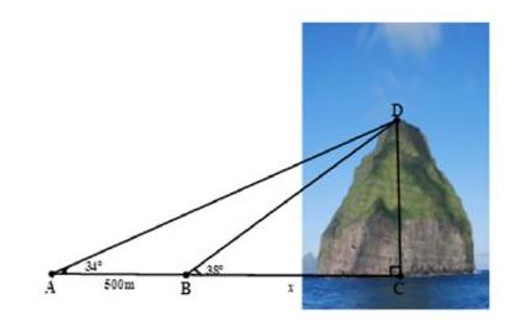
Lời giải
Bạn cần đăng ký gói VIP ( giá chỉ từ 250K ) để làm bài, xem đáp án và lời giải chi tiết không giới hạn.
Câu 5
Lời giải
Bạn cần đăng ký gói VIP ( giá chỉ từ 250K ) để làm bài, xem đáp án và lời giải chi tiết không giới hạn.

Lời giải
Bạn cần đăng ký gói VIP ( giá chỉ từ 250K ) để làm bài, xem đáp án và lời giải chi tiết không giới hạn.
Lời giải
Bạn cần đăng ký gói VIP ( giá chỉ từ 250K ) để làm bài, xem đáp án và lời giải chi tiết không giới hạn.
 Nhắn tin Zalo
 Hỏi bài tập