






















A number of factors related to the voice reveal the personality of the speaker.
The first is the broad area of communication, which includes imparting information by use of language, communicating with a group or an individual and specialized communication through performance. A person conveys thoughts and ideas through choice of words, by a tone of voice that is pleasant or unpleasant, gentle or harsh, by the rhythm that is inherent within the language itself, and by speech rhythms that are flowing and regular or uneven and hesitant, and finally, by the pitch and melody of the utterance. When speaking before a group, a person’s tone may indicate uncertainty or fright, confidence or calm. At interpersonal levels, the tone may reflect ideas and feelings over and above the words chosen, or may believe them. Here, the participant’s tone can consciously or unconsciously reflect intuitive sympathy or antipathy, lack of concern or interest, fatigue, anxiety, enthusiasm or excitement, all of which are usually discernible by the acute listener. Public performance is a manner of communication that is highly specialized with its own techniques for obtaining effects by voice and /or gesture. The motivation derived from the text, and in the case of singing, the music, in combination with the performer’s skills, personality, and ability to create empathy will determine the success of artistic, political, or pedagogic communication.
Second, the voice gives psychological clues to a person’s self-image, perception of others, and emotional health. Self-image can be indicated by a tone of voice that is confident, pretentious, shy, aggressive, outgoing, or exuberant, to name only a few personality traits. Also the sound may give a clue to the facade or mask of that person, for example, a shy person hiding behind an overconfident front. How a speaker perceives the listener’s receptiveness, interest, or sympathy in any given conversation can drastically alter the tone of presentation, by encouraging or discouraging the speaker. Emotional health is evidenced in the voice by free and melodic sounds of the happy, by constricted and harsh sound of the angry, and by dull and lethargic qualities of the depressed.
What does the word "Here" in paragraph 1 refer to?
A number of factors related to the voice reveal the personality of the speaker.
The first is the broad area of communication, which includes imparting information by use of language, communicating with a group or an individual and specialized communication through performance. A person conveys thoughts and ideas through choice of words, by a tone of voice that is pleasant or unpleasant, gentle or harsh, by the rhythm that is inherent within the language itself, and by speech rhythms that are flowing and regular or uneven and hesitant, and finally, by the pitch and melody of the utterance. When speaking before a group, a person’s tone may indicate uncertainty or fright, confidence or calm. At interpersonal levels, the tone may reflect ideas and feelings over and above the words chosen, or may believe them. Here, the participant’s tone can consciously or unconsciously reflect intuitive sympathy or antipathy, lack of concern or interest, fatigue, anxiety, enthusiasm or excitement, all of which are usually discernible by the acute listener. Public performance is a manner of communication that is highly specialized with its own techniques for obtaining effects by voice and /or gesture. The motivation derived from the text, and in the case of singing, the music, in combination with the performer’s skills, personality, and ability to create empathy will determine the success of artistic, political, or pedagogic communication.
Second, the voice gives psychological clues to a person’s self-image, perception of others, and emotional health. Self-image can be indicated by a tone of voice that is confident, pretentious, shy, aggressive, outgoing, or exuberant, to name only a few personality traits. Also the sound may give a clue to the facade or mask of that person, for example, a shy person hiding behind an overconfident front. How a speaker perceives the listener’s receptiveness, interest, or sympathy in any given conversation can drastically alter the tone of presentation, by encouraging or discouraging the speaker. Emotional health is evidenced in the voice by free and melodic sounds of the happy, by constricted and harsh sound of the angry, and by dull and lethargic qualities of the depressed.
What does the word "Here" in paragraph 1 refer to?
Quảng cáo
Trả lời:
 Giải bởi Vietjack
Đáp án đúng là A
Phương pháp giải
Đọc hiểu tìm thông tin đoạn 1
Thông tin: At interpersonal levels, the tone may reflect ideas and feelings over and above the words chosen, or may believe them. Here, the participant’s tone can consciously or unconsciously reflect intuitive sympathy or antipathy, lack of concern or interest, fatigue, anxiety, enthusiasm or excitement, all of which are usually discernible by the acute listener.
Lời giải
Từ "Here" trong đoạn 1 ám chỉ điều gì?
A. khi tương tác giữa các cá nhân
B. giọng điệu
C. ý tưởng và cảm xúc
D. từ ngữ được chọn
Thông tin: At interpersonal levels, the tone may reflect ideas and feelings over and above the words chosen, or may believe them. Here, the participant’s tone can consciously or unconsciously reflect intuitive sympathy or antipathy, lack of concern or interest, fatigue, anxiety, enthusiasm or excitement, all of which are usually discernible by the acute listener.
Tạm dịch: Ở cấp độ giữa các cá nhân, giọng điệu có thể phản ánh ý tưởng và cảm xúc vượt trên những từ ngữ đã chọn, hoặc có thể tin vào chúng. Ở đây, giọng điệu của người tham gia có thể có ý thức hoặc vô thức phản ánh sự đồng cảm hoặc ác cảm trực quan, sự thiếu quan tâm hoặc hứng thú, sự mệt mỏi, lo lắng, nhiệt tình hoặc phấn khích, tất cả những điều này thường được người nghe tinh tường nhận ra.
=> Here (ở đây) sẽ ám chỉ một trạng từ chỉ nơi chốn nên đáp án A phù hợp nhất.
Câu hỏi cùng đoạn
Câu 2:
What does the author mean by staring that, "At interpersonal levels, tone may reflect ideas and feelings over and above the words chosen."?
Giải bởi Vietjack
Đáp án đúng là C
Phương pháp giải
"At interpersonal levels, tone may reflect ideas and feelings over and above the words chosen."
("Ở cấp độ giao tiếp giữa các cá nhân, giọng điệu có thể phản ánh ý tưởng và cảm xúc vượt ra ngoài những từ ngữ được chọn.")
Lời giải
Tác giả có ý gì khi nói rằng, "Ở cấp độ giao tiếp giữa các cá nhân, giọng điệu có thể phản ánh ý tưởng và cảm xúc vượt ra ngoài những từ ngữ được chọn."?
A. Giọng điệu cao phản ánh sự giao tiếp đầy cảm xúc.
B. Cảm xúc được thể hiện bằng những từ ngữ khác với ý tưởng.
C. Giọng điệu có thể truyền tải thông tin vượt ra ngoài ý nghĩa của từ ngữ.
D. Cảm xúc khó diễn đạt hơn ý tưởng.
Câu 3:
Which of the following does the author probably support about public performance?
Giải bởi Vietjack
Đáp án đúng là A
Phương pháp giải
Đọc hiểu và tìm thông tin đoạn 1
Lời giải
Tác giả có lẽ ủng hộ quan điểm nào sau đây về buổi biểu diễn trước công chúng?
A. Thành công của buổi biểu diễn trước công chúng phụ thuộc vào kỹ thuật, kỹ năng và sự kết nối với khán giả.
B. Thành công của buổi biểu diễn trước công chúng chỉ phụ thuộc vào văn bản hoặc âm nhạc được trình diễn.
C. Chỉ có tài năng thiên bẩm, bất kể sự chuẩn bị hay kỹ năng, mới đảm bảo giao tiếp hiệu quả.
D. Động lực đằng sau buổi biểu diễn có ít tác động đến thành công của buổi biểu diễn.
Thông tin: Public performance is a manner of communication that is highly specialized with its own techniques for obtaining effects by voice and /or gesture. The motivation derived from the text, and in the case of singing, the music, in combination with the performer’s skills, personality, and ability to create empathy will determine the success of artistic, political, or pedagogic communication.
Tạm dịch: Biểu diễn công cộng là một hình thức giao tiếp có tính chuyên môn hóa cao với các kỹ thuật riêng để đạt được hiệu ứng bằng giọng nói và/hoặc cử chỉ. Động lực xuất phát từ văn bản, và trong trường hợp ca hát, âm nhạc, kết hợp với kỹ năng, tính cách và khả năng tạo ra sự đồng cảm của người biểu diễn sẽ quyết định sự thành công của giao tiếp nghệ thuật, chính trị hoặc sư phạm.
Câu 4:
Which of the following best describes the main idea of the second paragraph?
Which of the following best describes the main idea of the second paragraph?
Giải bởi Vietjack
Đáp án đúng là C
Phương pháp giải
Đọc hiểu suy luận đoạn 2
Lời giải
Câu nào sau đây mô tả tốt nhất ý chính của đoạn văn thứ hai?
A. Giọng điệu chủ yếu bị ảnh hưởng bởi các yếu tố môi trường hơn là các đặc điểm tính cách.
B. Giọng điệu chủ yếu được xác định bởi sức khỏe thể chất của một người.
C. Giọng nói cung cấp manh mối về hình ảnh bản thân, nhận thức của một người về người khác và sức khỏe cảm xúc.
D. Giọng nói của một người chỉ phản ánh mức độ tự tin của họ và không có gì khác.
Thông tin: Second, the voice gives psychological clues to a person’s self-image, perception of others, and emotional health. Self-image can be indicated by a tone of voice that is confident, pretentious, shy, aggressive, outgoing, or exuberant, to name only a few personality traits. Also the sound may give a clue to the facade or mask of that person, for example, a shy person hiding behind an overconfident front.
Tạm dịch: Thứ hai, giọng nói cung cấp manh mối tâm lý về hình ảnh bản thân, nhận thức của một người về người khác và sức khỏe cảm xúc. Hình ảnh bản thân có thể được chỉ ra bằng giọng nói tự tin, giả tạo, nhút nhát, hung hăng, hướng ngoại hoặc phấn khích, chỉ để nêu một vài đặc điểm tính cách. Âm thanh cũng có thể cung cấp manh mối về mặt tiền hoặc mặt nạ của người đó, ví dụ, một người nhút nhát ẩn sau vẻ ngoài quá tự tin.
Câu 5:
What is the word "drastically" in paragraph 2 closest in meaning to?
Giải bởi Vietjack
Đáp án đúng là A
Phương pháp giải
Từ vựng (drastically (adv) mãnh liệt)
Lời giải
A. severely (adv) dữ dội
B. easily (adv) dễ
C. exactly (adv) chính xác
D. frequently (adv) thường xuyên
=> drastically = severely
Thông tin: How a speaker perceives the listener’s receptiveness, interest, or sympathy in any given conversation can drastically alter the tone of presentation, by encouraging or discouraging the speaker.
Tạm dịch: Cách người nói cảm nhận được mức độ tiếp thu, hứng thú hoặc sự đồng cảm của người nghe trong bất kỳ cuộc trò chuyện nào có thể thay đổi đáng kể giọng điệu của bài thuyết trình, bằng cách khuyến khích hoặc làm nản lòng người nói.
Đăng nhập để xem lời giải
Lưu tiến độ và luyện tập hiệu quả hơn. Hoàn toàn miễn phí!
Đang tải chế độ Học...
Hot: 1000+ đề thi giữa kì 1 lớp 1-12 đầy đủ các môn (Update 2026) (chỉ từ 60k). Tải ngay
CÂU HỎI HOT CÙNG CHỦ ĐỀ
Đăng nhập để xem lời giải
Lưu tiến độ và luyện tập hiệu quả hơn. Hoàn toàn miễn phí!
Lời giải
Đáp án đúng là "28/3"
Phương pháp giải
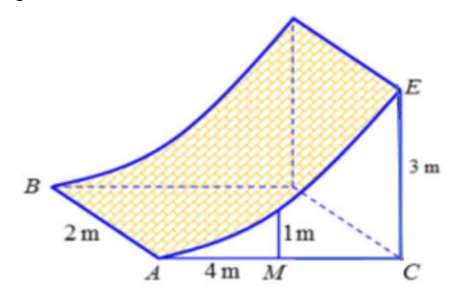
Để tính thể tích bê tông làm tường cong theo đề bài, ta cần tính diện tích tam giác cong \(ACE\) rồi nhân với \(AB\).
Diện tích hình phẳng giới hạn bởi các đồ thị hàm số \(y = f\left( x \right),y = g\left( x \right)\) và các đường thẳng \(x = a,x = b\) (\(f\left( x \right),g\left( x \right)\) liên tục trên đoạn \(\left[ {a;b} \right])\) là: .
Lời giải
Đặt hệ trục tọa độ \(Oxy\) sao cho \(O \equiv C,Oy \equiv CE\), tia \(Ox\) là tia đối của tia \(CA\) như hình vẽ.
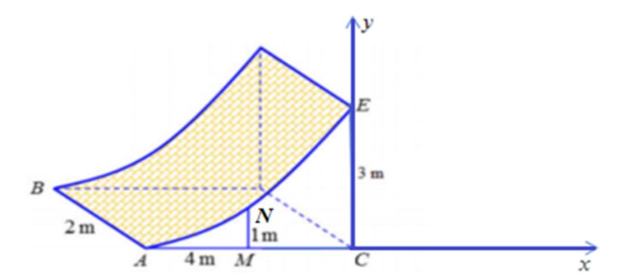
Gọi \(N\) là giao điểm của đường cong \(AE\) và đường thẳng qua \(M\), song song với \(CE\).
Do cạnh cong \(AE\) nằm trên một đường Parabol nên phương trình cạnh cong \(AE\) có dạng \(y = a{x^2} + bx + c\). Cạnh \(AE\) đi qua các điểm \(A\left( { - 4;0} \right);E\left( {0;3} \right);N\left( { - 2;1} \right)\) nên ta có hệ phương trình:
\(\left\{ {\begin{array}{*{20}{l}}{16a - 4b + c = 0}\\{c = 3}\\{4a - 2b + c = 1}\end{array} \Leftrightarrow \left\{ {\begin{array}{*{20}{l}}{a = \frac{1}{8}}\\{b = \frac{5}{4}}\\{c = 3}\end{array}} \right.} \right.\). Do đó cạnh cong \(AE\) có phương trình \(y = \frac{1}{8}{x^2} + \frac{5}{4}x + 3\).
Ta có \({S_{ACE}} = \int\limits_{ - 4}^0 {\left( {\frac{1}{8}{x^2} + \frac{5}{4}x + 3} \right)dx} = \left. {\left( {\frac{1}{{24}}{x^3} + \frac{5}{8}{x^2} + 3x} \right)} \right|_{ - 4}^0 = \frac{{14}}{3}\).
Thể tích bê tông cần sử dụng để tạo nên khối tường cong đã cho là:
\(V = {S_{ACE}}.h = \frac{{14}}{3}.2 = \frac{{28}}{3}\).
Câu 2
Đăng nhập để xem lời giải
Lưu tiến độ và luyện tập hiệu quả hơn. Hoàn toàn miễn phí!
Lời giải
Đáp án đúng là D
Phương pháp giải
Lời giải
Xà phòng là hỗn hợp muối sodium hoặc potassium của các acid béo và các chất phụ gia. Các acid béo ở đây thường là acid béo no như palmitic acid hoặc stearic acid.
Câu 3
Đăng nhập để xem lời giải
Lưu tiến độ và luyện tập hiệu quả hơn. Hoàn toàn miễn phí!
Lời giải
Bạn cần đăng ký gói VIP ( giá chỉ từ 250K ) để làm bài, xem đáp án và lời giải chi tiết không giới hạn.
Câu 4
Đăng nhập để xem lời giải
Lưu tiến độ và luyện tập hiệu quả hơn. Hoàn toàn miễn phí!
Lời giải
Bạn cần đăng ký gói VIP ( giá chỉ từ 250K ) để làm bài, xem đáp án và lời giải chi tiết không giới hạn.
Đăng nhập để xem lời giải
Lưu tiến độ và luyện tập hiệu quả hơn. Hoàn toàn miễn phí!
Lời giải
Bạn cần đăng ký gói VIP ( giá chỉ từ 250K ) để làm bài, xem đáp án và lời giải chi tiết không giới hạn.

Đăng nhập để xem lời giải
Lưu tiến độ và luyện tập hiệu quả hơn. Hoàn toàn miễn phí!
Lời giải
Bạn cần đăng ký gói VIP ( giá chỉ từ 250K ) để làm bài, xem đáp án và lời giải chi tiết không giới hạn.
Đăng nhập để xem lời giải
Lưu tiến độ và luyện tập hiệu quả hơn. Hoàn toàn miễn phí!
Lời giải
Bạn cần đăng ký gói VIP ( giá chỉ từ 250K ) để làm bài, xem đáp án và lời giải chi tiết không giới hạn.
Đăng ký để học cùng Vietjack. Hoàn toàn miễn phí!
Bằng việc đăng ký, bạn đồng ý với Điều khoản sử dụng và Chính sách bảo mật của Vietjack.
 Nhắn tin Zalo
 Hỏi bài tập