






















Although noise, commonly defined as unwanted sound, is a widely recognized form of pollution, it is very difficult to measure because the discomfort experienced by different individuals is highly subjective and, therefore, variable. Exposure to lower levels of noise may be slightly irritating, whereas exposure to higher levels may actually cause hearing loss. Particularly in congested urban areas, the noise produced as a by-product of our advancing technology causes physical and psychological harm, and detracts from the quality of life for those who are exposed to it.
Unlike the eyes, which can be covered by the eyelids against strong light, the ear has no lid, and is, therefore, always open and vulnerable; noise penetrates without protection. Noise causes effects that the hearer cannot control and to which the body never becomes accustomed. Loud noises instinctively signal danger to any organism with a hearing mechanism, including human beings. In response, heartbeat and respiration accelerate, blood vessels constrict, the skin pales, and muscles tense. In fact, there is a general increase in functioning brought about by the flow of adrenaline released in response to fear, and some of these responses persist even longer than the noise, occasionally as long as thirty minutes after the sound has ceased.
Because noise is unavoidable in a complex, industrial society, we are constantly responding in the same way that we would respond to danger. Recently, researchers have concluded that noise and our response may be much more than an annoyance. It may be a serious threat to physical and psychological health and well-being, causing damage not only to the ear and brain but also to the heart and stomach. We have long known that hearing loss is America's number one nonfatal health problem, but now we are learning that some of us with heart disease and ulcers may be victims of noise as well. Fetuses exposed to noise tend to be overactive, they cry easily, and they are more sensitive to gastrointestinal problems after birth. In addition, the psychic effect of noise is very important. Nervousness, irritability, tension, and anxiety increase affecting the quality of rest during sleep, and the efficiency of activities during waking hours, as well as the way that we interact with each other.
What does the word “it” in paragraph 1 refer to?
Although noise, commonly defined as unwanted sound, is a widely recognized form of pollution, it is very difficult to measure because the discomfort experienced by different individuals is highly subjective and, therefore, variable. Exposure to lower levels of noise may be slightly irritating, whereas exposure to higher levels may actually cause hearing loss. Particularly in congested urban areas, the noise produced as a by-product of our advancing technology causes physical and psychological harm, and detracts from the quality of life for those who are exposed to it.
Unlike the eyes, which can be covered by the eyelids against strong light, the ear has no lid, and is, therefore, always open and vulnerable; noise penetrates without protection. Noise causes effects that the hearer cannot control and to which the body never becomes accustomed. Loud noises instinctively signal danger to any organism with a hearing mechanism, including human beings. In response, heartbeat and respiration accelerate, blood vessels constrict, the skin pales, and muscles tense. In fact, there is a general increase in functioning brought about by the flow of adrenaline released in response to fear, and some of these responses persist even longer than the noise, occasionally as long as thirty minutes after the sound has ceased.
Because noise is unavoidable in a complex, industrial society, we are constantly responding in the same way that we would respond to danger. Recently, researchers have concluded that noise and our response may be much more than an annoyance. It may be a serious threat to physical and psychological health and well-being, causing damage not only to the ear and brain but also to the heart and stomach. We have long known that hearing loss is America's number one nonfatal health problem, but now we are learning that some of us with heart disease and ulcers may be victims of noise as well. Fetuses exposed to noise tend to be overactive, they cry easily, and they are more sensitive to gastrointestinal problems after birth. In addition, the psychic effect of noise is very important. Nervousness, irritability, tension, and anxiety increase affecting the quality of rest during sleep, and the efficiency of activities during waking hours, as well as the way that we interact with each other.
What does the word “it” in paragraph 1 refer to?
Quảng cáo
Trả lời:
 Giải bởi Vietjack
Đáp án đúng là C
Phương pháp giải
Lời giải
Từ “it” trong đoạn 1 ám chỉ điều gì?
A. chất lượng cuộc sống
B. công nghệ tiên tiến
C. tiếng ồn
D. tác hại về thể chất và tâm lý
Thông tin: Particularly in congested urban areas, the noise produced as a by-product of our advancing technology causes physical and psychological harm, and detracts from the quality of life for those who are exposed to it.
Tạm dịch: Đặc biệt ở những khu vực đô thị đông đúc, tiếng ồn phát sinh do công nghệ tiên tiến gây ra tác hại về thể chất và tâm lý, đồng thời làm giảm chất lượng cuộc sống của những người phải tiếp xúc với nó.
Câu hỏi cùng đoạn
Câu 2:
What is the main topic of the first paragraph?
What is the main topic of the first paragraph?
Giải bởi Vietjack
Đáp án đúng là C
Phương pháp giải
Lời giải
Chủ đề chính của đoạn văn đầu tiên là gì?
A. Tác động chủ quan của tiếng ồn lên cá nhân.
B. Ô nhiễm tiếng ồn từ công nghệ.
C. Khó khăn trong việc đo lường ô nhiễm tiếng ồn.
D. Các khu vực đô thị chịu ảnh hưởng nhiều hơn từ ô nhiễm tiếng ồn.
Thông tin: Although noise, commonly defined as unwanted sound, is a widely recognized form of pollution, it is very difficult to measure because the discomfort experienced by different individuals is highly subjective and, therefore, variable. Exposure to lower levels of noise may be slightly irritating, whereas exposure to higher levels may actually cause hearing loss.
Tạm dịch: Mặc dù tiếng ồn, thường được định nghĩa là âm thanh không mong muốn, là một dạng ô nhiễm được công nhận rộng rãi, nhưng rất khó để đo lường vì sự khó chịu mà mỗi cá nhân trải qua là rất chủ quan và do đó, thay đổi. Tiếp xúc với mức độ tiếng ồn thấp hơn có thể gây khó chịu nhẹ, trong khi tiếp xúc với mức độ cao hơn thực sự có thể gây mất thính lực.
Câu 3:
Which of the following is NOT the response of human body to noise?
Which of the following is NOT the response of human body to noise?
Giải bởi Vietjack
Đáp án đúng là B
Phương pháp giải
Lời giải
Đâu KHÔNG PHẢI là phản ứng của cơ thể con người với tiếng ồn?
A. Tăng căng cơ.
B. Làm chậm nhịp tim.
C. Thu hẹp mạch máu.
D. Tăng tốc hô hấp.
Thông tin: In response, heartbeat and respiration accelerate, blood vessels constrict, the skin pales, and muscles tense.
Tạm dịch: Để phản ứng lại, nhịp tim và nhịp thở tăng nhanh, mạch máu co lại, da tái nhợt và cơ căng cứng.
Câu 4:
Based on the passage, how does noise affect psychological and physical health in industrial societies?
Based on the passage, how does noise affect psychological and physical health in industrial societies?
Giải bởi Vietjack
Đáp án đúng là C
Phương pháp giải
Lời giải
Dựa trên đoạn văn, tiếng ồn ảnh hưởng đến sức khỏe tâm lý và thể chất như thế nào trong xã hội công nghiệp?
A. Tiếng ồn chủ yếu gây mất thính lực, nhưng không có hậu quả đáng kể nào khác đối với sức khỏe.
B. Tiếng ồn làm tăng sự lo lắng và cáu kỉnh, và tác động của nó chỉ giới hạn ở não và tai.
C. Tiếng ồn có thể gây ra bệnh tim, loét và phá vỡ cả sức khỏe tâm lý và tương tác xã hội.
D. Tiếng ồn có tác động tối thiểu đến giấc ngủ và hoạt động khi thức nhưng ảnh hưởng nhiều nhất đến sức khỏe tiêu hóa.
Thông tin: We have long known that hearing loss is America's number one nonfatal health problem, but now we are learning that some of us with heart disease and ulcers may be victims of noise as well. […] Nervousness, irritability, tension, and anxiety increase affecting the quality of rest during sleep, and the efficiency of activities during waking hours, as well as the way that we interact with each other.
Tạm dịch: Chúng ta đã biết từ lâu rằng mất thính lực là vấn đề sức khỏe không gây tử vong số một ở Mỹ, nhưng giờ đây chúng ta biết rằng một số người trong chúng ta mắc bệnh tim và loét cũng có thể là nạn nhân của tiếng ồn. […] Sự lo lắng, cáu kỉnh, căng thẳng và bồn chồn gia tăng ảnh hưởng đến chất lượng nghỉ ngơi trong khi ngủ và hiệu quả của các hoạt động trong giờ thức, cũng như cách chúng ta tương tác với nhau.
Câu 5:
Which of the following statements would the author most likely support?
Which of the following statements would the author most likely support?
A. Noise is more than a mere irritation; it poses a significant danger to human health.
Giải bởi Vietjack
Đáp án đúng là A
Phương pháp giải
Lời giải
Tác giả có khả năng ủng hộ tuyên bố nào sau đây nhất?
A. Tiếng ồn không chỉ là sự khó chịu mà còn là mối đe dọa nghiêm trọng đến sức khỏe con người.
B. Tiếng ồn gây ảnh hưởng tiêu cực đến thai nhi nhưng chúng không bị ảnh hưởng sau khi sinh.
C. Tiếp xúc với tiếng ồn chỉ gây mất thính lực và không liên quan đến các vấn đề sức khỏe khác.
D. Tiếng ồn là không thể tránh khỏi, nhưng nó có tác động tối thiểu đến sức khỏe tổng thể.
Thông tin: Recently, researchers have concluded that noise and our response may be much more than an annoyance. It may be a serious threat to physical and psychological health and well-being.
Tạm dịch: Gần đây, các nhà nghiên cứu đã kết luận rằng tiếng ồn và phản ứng của chúng ta có thể không chỉ là sự khó chịu. Nó có thể là mối đe dọa nghiêm trọng đến sức khỏe thể chất và tâm lý cũng như con người
Hot: Giáo án năng lực số, PPT AI khởi động lớp 1-12 (Update 2026) (chỉ từ 150k). Tải ngay
CÂU HỎI HOT CÙNG CHỦ ĐỀ
Câu 1
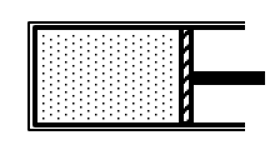
Lời giải
Đáp án đúng là D
Phương pháp giải
Sử dụng công thức tính tính thể tích: V = hS
Xác định các thông số trạng thái.
Áp dụng công thức định luật Boyle.
Lời giải
Xét trạng thái 1: \(\left\{ {\begin{array}{*{20}{l}}{{p_1}}\\{{V_1} = {h_1}S}\end{array}} \right.\)
Xét trạng thái 2: \(\left\{ {\begin{array}{*{20}{l}}{{p_2} = 3{p_1}}\\{{V_2} = {h_2}S}\end{array}} \right.\)
Quá trình đẳng nhiệt diễn ra nên ta có: \({p_1}{V_1} = {p_2}{V_2}\)
\(\begin{array}{l} \Rightarrow {p_1}{h_1}S = 3{p_1}{h_2}S\\ \Rightarrow {h_1} = 2{h_2}\\ \Rightarrow {h_2} = \frac{{{h_1}}}{3} = 5\;{\rm{cm}}\end{array}\)
\( \Rightarrow \) pitong dịch sang trái 10 cm.
Câu 2
Lời giải
Đáp án đúng là C
Phương pháp giải
Xác suất có điều kiện
Lời giải
\(\Omega = \{ GG;GT;TG,TT\} \)
Số phần tử không gian mẫu: \({n_\Omega } = 4\)
Gọi \(A\) là biến cố : "2 người con đều là gái"
Gọi \(B\) là biến cố : "Có ít nhất một người con là gái"
Số phần tử của biến cố \(A\) là \({n_A} = 1\)
Số phần tử của biến cố \(B\) là \({n_B} = 3\)
\( \Rightarrow n(A \cap B) = 1\)
\(P(A\mid B) = \frac{{n(A \cap B)}}{{n(B)}} = \frac{1}{3}\)
Câu 3
Lời giải
Bạn cần đăng ký gói VIP ( giá chỉ từ 250K ) để làm bài, xem đáp án và lời giải chi tiết không giới hạn.
Lời giải
Bạn cần đăng ký gói VIP ( giá chỉ từ 250K ) để làm bài, xem đáp án và lời giải chi tiết không giới hạn.
Lời giải
Bạn cần đăng ký gói VIP ( giá chỉ từ 250K ) để làm bài, xem đáp án và lời giải chi tiết không giới hạn.
Lời giải
Bạn cần đăng ký gói VIP ( giá chỉ từ 250K ) để làm bài, xem đáp án và lời giải chi tiết không giới hạn.
Lời giải
Bạn cần đăng ký gói VIP ( giá chỉ từ 250K ) để làm bài, xem đáp án và lời giải chi tiết không giới hạn.
 Nhắn tin Zalo
 Hỏi bài tập