






















Millions of people are using cellphones today. In many places, it is actually considered unusual not to use one. In many countries, cellphones are very popular with young people. They find that the phones are more than a means of communication - having a mobile phone shows that they are cool and connected.
The explosion in mobile phone use around the world has made some health professionals worried. Some doctors are concerned that in the future many people may suffer health problems from the use of mobile phones. In England, there has been a serious debate about this issue. Mobile phone companies are worried about the negative publicity of such ideas. They say that there is no proof that mobile phones are bad for your health.
On the other hand, medical studies have shown changes in the brain cells of some people who use mobile phones. Signs of change in the tissues of the brain and head can be detected with modern scanning equipment. In one case, a traveling salesman had to retire at young age because of serious memory loss. He couldn't remember even simple tasks. He would often forget the name of his own son. This man used to talk on his mobile phone for about six hours a day, every day of his working week, for a couple of years. His family doctor blamed his mobile phone use, but his employer's doctor didn't agree.
What is it that makes mobile phones potentially harmful? The answer is radiation. High-tech machines can detect very small amounts of radiation from mobile phones. Mobile phone companies agree that there is some radiation, but they say the amount is too small to worry about.
As the discussion about their safety continues, it appears that it's best to use mobile phones less often. Use your regular phone if you want to talk for a long time. Use your mobile phone only when you really need it. Mobile phones can be very useful and convenient, especially in emergencies. In the future, mobile phones may have a warning label that says they are bad for your health. So for now, it's wise not to use your mobile phone too often.
What does the word “They” in paragraph 2 refer to?
Millions of people are using cellphones today. In many places, it is actually considered unusual not to use one. In many countries, cellphones are very popular with young people. They find that the phones are more than a means of communication - having a mobile phone shows that they are cool and connected.
The explosion in mobile phone use around the world has made some health professionals worried. Some doctors are concerned that in the future many people may suffer health problems from the use of mobile phones. In England, there has been a serious debate about this issue. Mobile phone companies are worried about the negative publicity of such ideas. They say that there is no proof that mobile phones are bad for your health.
On the other hand, medical studies have shown changes in the brain cells of some people who use mobile phones. Signs of change in the tissues of the brain and head can be detected with modern scanning equipment. In one case, a traveling salesman had to retire at young age because of serious memory loss. He couldn't remember even simple tasks. He would often forget the name of his own son. This man used to talk on his mobile phone for about six hours a day, every day of his working week, for a couple of years. His family doctor blamed his mobile phone use, but his employer's doctor didn't agree.
What is it that makes mobile phones potentially harmful? The answer is radiation. High-tech machines can detect very small amounts of radiation from mobile phones. Mobile phone companies agree that there is some radiation, but they say the amount is too small to worry about.
As the discussion about their safety continues, it appears that it's best to use mobile phones less often. Use your regular phone if you want to talk for a long time. Use your mobile phone only when you really need it. Mobile phones can be very useful and convenient, especially in emergencies. In the future, mobile phones may have a warning label that says they are bad for your health. So for now, it's wise not to use your mobile phone too often.
What does the word “They” in paragraph 2 refer to?
Quảng cáo
Trả lời:
 Giải bởi Vietjack
Đáp án đúng là B
Phương pháp giải
Thông tin: Mobile phone companies are worried about the negative publicity of such ideas. They say that there is no proof that mobile phones are bad for your health.
Lời giải
Từ “They” trong đoạn 2 ám chỉ điều gì?
A. bác sĩ
B. công ty điện thoại di động
C. ý tưởng
D. điện thoại di động
Thông tin: Mobile phone companies are worried about the negative publicity of such ideas. They say that there is no proof that mobile phones are bad for your health.
Tạm dịch: Các công ty điện thoại di động lo ngại về sự công khai tiêu cực của những ý tưởng như vậy. Họ nói rằng không có bằng chứng nào cho thấy điện thoại di động có hại cho sức khỏe của bạn.
Câu hỏi cùng đoạn
Câu 2:
What is mentioned about the man who used his cellphone too often in paragraph 3?
What is mentioned about the man who used his cellphone too often in paragraph 3?
Giải bởi Vietjack
Đáp án đúng là D
Phương pháp giải
Thông tin: In one case, a traveling salesman had to retire at a young age because of serious memory loss. He couldn't remember even simple tasks. He would often forget the name of his own son.
Lời giải
Đoạn văn 3 đề cập đến điều gì về người đàn ông sử dụng điện thoại di động quá thường xuyên?
A. Anh ta bị mất khả năng tinh thần nghiêm trọng.
B. Anh ta không còn có thể suy nghĩ sáng suốt được nữa.
C. Anh ta bỏ rơi gia đình.
D. Anh ta có vấn đề về trí nhớ.
Thông tin: In one case, a traveling salesman had to retire at a young age because of serious memory loss. He couldn't remember even simple tasks. He would often forget the name of his own son.
Tạm dịch: Trong một trường hợp, một nhân viên bán hàng lưu động phải nghỉ hưu khi còn trẻ vì mất trí nhớ nghiêm trọng. Ông không thể nhớ ngay cả những công việc đơn giản. Ông thường quên tên con trai mình.
Câu 3:
What is the word “potentially” in paragraph 4 closest in meaning to?
Giải bởi Vietjack
Đáp án đúng là B
Phương pháp giải
Potentially (adv) có tiềm năng, có thể
Lời giải
Từ “potentially” trong đoạn 4 có nghĩa gần nhất với từ nào?
Potentially (adv) có tiềm năng, có thể
A. obviously (adv) rõ ràng
B. possibly (adv) có thể
C. certainly (adv) chắc chắn
D. privately (adv) riêng tư
=> potentially = possibly
Thông tin: What is it that makes mobile phones potentially harmful?
Tạm dịch: Điều gì khiến điện thoại di động có khả năng gây hại?
Câu 4:
Which of the following best paraphrases this sentence: “Phones are more than a means of communication - having a mobile phone shows that they are cool and connected.”?
Which of the following best paraphrases this sentence: “Phones are more than a means of communication - having a mobile phone shows that they are cool and connected.”?
Giải bởi Vietjack
Đáp án đúng là C
Phương pháp giải
“Phones are more than a means of communication - having a mobile phone shows that they are cool and connected.”
(Điện thoại không chỉ là phương tiện giao tiếp - sở hữu một chiếc điện thoại di động cho thấy chúng thật tuyệt và được kết nối.)
Lời giải
Câu nào sau đây diễn giải câu này hay nhất: “Điện thoại không chỉ là phương tiện giao tiếp - sở hữu một chiếc điện thoại di động cho thấy họ thật ngầu và được kết nối.”?
A. Điện thoại không còn quan trọng để giao tiếp nữa mà là một tuyên bố thời trang cho mọi người. (sai thông tin về chức năng giao tiếp)
B. Điện thoại chỉ được sử dụng để giao tiếp, nhưng điện thoại di động thì thật tuyệt và hiện đại. (sai nghĩa)
C. Điện thoại không chỉ để nói chuyện; sở hữu một chiếc điện thoại cũng chứng minh tính thời thượng và sự kết nối của họ. (sát nghĩa câu gốc)
D. Có điện thoại quan trọng hơn việc duy trì kết nối hoặc giao tiếp với người khác. (sai nghĩa)
Câu 5:
Which of the following does the author probably support?
Which of the following does the author probably support?
Giải bởi Vietjack
Đáp án đúng là A
Phương pháp giải
Thông tin: Use your mobile phone only when you really need it. Mobile phones can be very useful and convenient, especially in emergencies. In the future, mobile phones may have a warning label that says they are bad for your health. So for now, it's wise not to use your mobile phone too often.
Lời giải
Tác giả có lẽ ủng hộ quan điểm nào sau đây?
A. Mọi người chỉ nên sử dụng điện thoại di động khi cần thiết để giảm thiểu các rủi ro sức khỏe tiềm ẩn.
B. Điện thoại di động nên bị cấm hoàn toàn vì chúng cực kỳ nguy hiểm.
C. Điện thoại di động an toàn và có thể được sử dụng thường xuyên tùy thích mà không có hậu quả nào.
D. Nên tránh sử dụng điện thoại thông thường và luôn ưu tiên sử dụng điện thoại di động cho các cuộc trò chuyện dài.
Thông tin: Use your mobile phone only when you really need it. Mobile phones can be very useful and convenient, especially in emergencies. In the future, mobile phones may have a warning label that says they are bad for your health. So for now, it's wise not to use your mobile phone too often.
Tạm dịch: Chỉ sử dụng điện thoại di động khi bạn thực sự cần. Điện thoại di động có thể rất hữu ích và tiện lợi, đặc biệt là trong trường hợp khẩn cấp. Trong tương lai, điện thoại di động có thể có nhãn cảnh báo nói rằng chúng không tốt cho sức khỏe của bạn. Vì vậy, hiện tại, tốt nhất là không nên sử dụng điện thoại di động quá thường xuyên.
Hot: Giáo án năng lực số, PPT AI khởi động lớp 1-12 (Update 2026) (chỉ từ 150k). Tải ngay
CÂU HỎI HOT CÙNG CHỦ ĐỀ
Câu 1
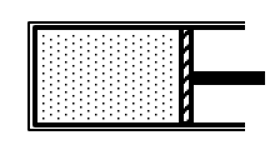
Lời giải
Đáp án đúng là D
Phương pháp giải
Sử dụng công thức tính tính thể tích: V = hS
Xác định các thông số trạng thái.
Áp dụng công thức định luật Boyle.
Lời giải
Xét trạng thái 1: \(\left\{ {\begin{array}{*{20}{l}}{{p_1}}\\{{V_1} = {h_1}S}\end{array}} \right.\)
Xét trạng thái 2: \(\left\{ {\begin{array}{*{20}{l}}{{p_2} = 3{p_1}}\\{{V_2} = {h_2}S}\end{array}} \right.\)
Quá trình đẳng nhiệt diễn ra nên ta có: \({p_1}{V_1} = {p_2}{V_2}\)
\(\begin{array}{l} \Rightarrow {p_1}{h_1}S = 3{p_1}{h_2}S\\ \Rightarrow {h_1} = 2{h_2}\\ \Rightarrow {h_2} = \frac{{{h_1}}}{3} = 5\;{\rm{cm}}\end{array}\)
\( \Rightarrow \) pitong dịch sang trái 10 cm.
Câu 2
Lời giải
Đáp án đúng là C
Phương pháp giải
Xác suất có điều kiện
Lời giải
\(\Omega = \{ GG;GT;TG,TT\} \)
Số phần tử không gian mẫu: \({n_\Omega } = 4\)
Gọi \(A\) là biến cố : "2 người con đều là gái"
Gọi \(B\) là biến cố : "Có ít nhất một người con là gái"
Số phần tử của biến cố \(A\) là \({n_A} = 1\)
Số phần tử của biến cố \(B\) là \({n_B} = 3\)
\( \Rightarrow n(A \cap B) = 1\)
\(P(A\mid B) = \frac{{n(A \cap B)}}{{n(B)}} = \frac{1}{3}\)
Câu 3
Lời giải
Bạn cần đăng ký gói VIP ( giá chỉ từ 250K ) để làm bài, xem đáp án và lời giải chi tiết không giới hạn.
Lời giải
Bạn cần đăng ký gói VIP ( giá chỉ từ 250K ) để làm bài, xem đáp án và lời giải chi tiết không giới hạn.
Lời giải
Bạn cần đăng ký gói VIP ( giá chỉ từ 250K ) để làm bài, xem đáp án và lời giải chi tiết không giới hạn.
Lời giải
Bạn cần đăng ký gói VIP ( giá chỉ từ 250K ) để làm bài, xem đáp án và lời giải chi tiết không giới hạn.
Lời giải
Bạn cần đăng ký gói VIP ( giá chỉ từ 250K ) để làm bài, xem đáp án và lời giải chi tiết không giới hạn.
 Nhắn tin Zalo
 Hỏi bài tập