






















Although TikTok is still considered to be the new social media kid on the block, it’s incredible growth in recent years makes it hard to remember a time when the video looping platform wasn’t in our lives. With more than a billion downloads to its name, TikTok has not only proved itself to be one of the fastest growing apps of all time since it was first launched in 2016; it has also now surpassed Instagram by this metric. While Facebook and even Instagram’s audiences are ageing, there is little doubt that the next generation of social media users have embraced TikTok. In fact, during its first 5 years, the core audience was between 13 and 21.
TikTok has built its reputation on short, choreographed dance move videos; comedy sketches; lip synching; short tutorials; and sound bites from users looking to share fun and frivolous content with their friends. This style of video makes it trickier for brands to harness in the same way as the more expansive and flexible formats available on other social platforms. However, as TikTok matures, brands are finding better ways to leverage the huge user base – often through influencers but also increasingly through official accounts that are reimagining what an organisation can share.
The Met ( The Metropolitan Museum of Art) was one of the first museums to launch an official account on TikTok and was a trailblazer in creating content to engage the app’s young audience. One of The Met’s first initiatives back in 2019 was an art contest created to inspire users to showcase their best imitation of an artwork scene or act like art figures. This global challenge included an impressive prize of an all-expenses paid five night trip to New York, and the chance to be among the first to visit the Spring 2019 Costume Institute exhibition. As Kenneth Weine, Vice President and Chief Communications Officer at The Met, said at the time: “TikTok reaches hundreds of millions of users, many of whom are art enthusiasts. We look forward to deepening our connection with this audience, and to seeing the multiple creative ways they engage with The Met collection.”
For museums, TikTok is a unique challenge. But there are a growing number of examples of institutions effectively running accounts, distributing content and reaching new audiences by investing time and energy into the platform. And this has shown itself to be a worthwhile endeavour – not least because the pandemic pushed the already large TikTok audience into a global explosion of users.
(Adapted from https://www.museumnext.com/)
What is mentioned about TikTok according to the first paragraph?
Although TikTok is still considered to be the new social media kid on the block, it’s incredible growth in recent years makes it hard to remember a time when the video looping platform wasn’t in our lives. With more than a billion downloads to its name, TikTok has not only proved itself to be one of the fastest growing apps of all time since it was first launched in 2016; it has also now surpassed Instagram by this metric. While Facebook and even Instagram’s audiences are ageing, there is little doubt that the next generation of social media users have embraced TikTok. In fact, during its first 5 years, the core audience was between 13 and 21.
TikTok has built its reputation on short, choreographed dance move videos; comedy sketches; lip synching; short tutorials; and sound bites from users looking to share fun and frivolous content with their friends. This style of video makes it trickier for brands to harness in the same way as the more expansive and flexible formats available on other social platforms. However, as TikTok matures, brands are finding better ways to leverage the huge user base – often through influencers but also increasingly through official accounts that are reimagining what an organisation can share.
The Met ( The Metropolitan Museum of Art) was one of the first museums to launch an official account on TikTok and was a trailblazer in creating content to engage the app’s young audience. One of The Met’s first initiatives back in 2019 was an art contest created to inspire users to showcase their best imitation of an artwork scene or act like art figures. This global challenge included an impressive prize of an all-expenses paid five night trip to New York, and the chance to be among the first to visit the Spring 2019 Costume Institute exhibition. As Kenneth Weine, Vice President and Chief Communications Officer at The Met, said at the time: “TikTok reaches hundreds of millions of users, many of whom are art enthusiasts. We look forward to deepening our connection with this audience, and to seeing the multiple creative ways they engage with The Met collection.”
For museums, TikTok is a unique challenge. But there are a growing number of examples of institutions effectively running accounts, distributing content and reaching new audiences by investing time and energy into the platform. And this has shown itself to be a worthwhile endeavour – not least because the pandemic pushed the already large TikTok audience into a global explosion of users.
(Adapted from https://www.museumnext.com/)
What is mentioned about TikTok according to the first paragraph?
Quảng cáo
Trả lời:
 Giải bởi Vietjack
Đáp án đúng là A
Phương pháp giải
Đọc hiểu đoạn 1
Lời giải
Theo đoạn văn đầu tiên, điều gì được đề cập đến TikTok?
A. TikTok đã trở thành một trong những ứng dụng phát triển nhanh nhất kể từ khi ra mắt.
B. Đối tượng cốt lõi của TikTok chủ yếu bao gồm những người dùng từ 25 tuổi trở lên.
C. TikTok có ít lượt tải xuống hơn Instagram kể từ khi ra mắt.
D. Đối tượng của TikTok đang già đi, tương tự như Facebook và Instagram.
Thông tin: With more than a billion downloads to its name, TikTok has not only proved itself to be one of the fastest growing apps of all time since it was first launched in 2016.
Tạm dịch: Với hơn một tỷ lượt tải xuống, TikTok không chỉ chứng tỏ mình là một trong những ứng dụng phát triển nhanh nhất mọi thời đại kể từ khi lần đầu tiên ra mắt vào năm 2016.
Câu hỏi cùng đoạn
Câu 2:
What is the word “frivolous” in paragraph 2 closest in meaning to?
What is the word “frivolous” in paragraph 2 closest in meaning to?
Giải bởi Vietjack
Đáp án đúng là A
Phương pháp giải
Từ vựng (frivolous” (adj) vui vẻ, hài hước)
Lời giải
Từ “frivolous” (vui vẻ, hài hước) trong đoạn 2 có nghĩa gần nhất với từ nào?
A. joking (adj) trêu đùa, vui nhộn
B. critical (adj) nghiêm túc, nghiêm trọng
C. touching (adj) cả động
D. educational (adj) mang tính giáo dục
=> frivolous = joking
Thông tin: TikTok has built its reputation on short, choreographed dance move videos; comedy sketches; lip synching; short tutorials; and sound bites from users looking to share fun and frivolous content with their friends.
Tạm dịch: TikTok đã xây dựng danh tiếng của mình thông qua các video nhảy ngắn được biên đạo; tiểu phẩm hài; hát nhép; hướng dẫn ngắn; và các đoạn âm thanh từ những người dùng muốn chia sẻ nội dung vui nhộn và phù phiếm với bạn bè.
Câu 3:
What challenge do brands face when using TikTok for marketing?
What challenge do brands face when using TikTok for marketing?
Giải bởi Vietjack
Đáp án đúng là C
Phương pháp giải
Đọc hiểu đoạn 2
Lời giải
Các thương hiệu phải đối mặt với những thách thức nào khi sử dụng TikTok để tiếp thị?
A. Lượng người dùng TikTok quá nhỏ để biện minh cho các nỗ lực tiếp thị.
B. Các thương hiệu thấy khó để định hình lại phong cách video của mình.
C. Phong cách video của TikTok ít rộng rãi hơn so với các nền tảng khác.
D. TikTok không cho phép các thương hiệu tạo tài khoản chính thức.
Thông tin: This style of video makes it trickier for brands to harness in the same way as the more expansive and flexible formats available on other social platforms.
Tạm dịch: Phong cách video này khiến các thương hiệu gặp khó khăn hơn trong việc khai thác như các định dạng mở rộng và linh hoạt hơn hiện có trên các nền tảng mạng xã hội khác.
Câu 4:
Why does the author mention the Met in the third paragraph?
Why does the author mention the Met in the third paragraph?
Giải bởi Vietjack
Đáp án đúng là B
Phương pháp giải
Đọc hiểu đoạn 3
Lời giải
Tại sao tác giả lại đề cập đến Met ở đoạn thứ ba?
A. Để chứng minh cách các tổ chức truyền thống đấu tranh để thích ứng với các nền tảng xã hội hiện đại.
B. Để chỉ ra cách Met tiên phong sử dụng TikTok một cách sáng tạo để thu hút khán giả trẻ.
C. Để nhấn mạnh những hạn chế của phong cách video TikTok đối với các tổ chức nghiêm túc.
D. Để làm nổi bật vai trò của TikTok trong việc định hình lại cách các tổ chức kết nối với người dùng toàn cầu.
Thông tin: The Met ( The Metropolitan Museum of Art) was one of the first museums to launch an official account on TikTok and was a trailblazer in creating content to engage the app’s young audience.
Tạm dịch: Bảo tàng Met (Bảo tàng Nghệ thuật Metropolitan) là một trong những bảo tàng đầu tiên ra mắt tài khoản chính thức trên TikTok và là đơn vị tiên phong trong việc tạo ra nội dung thu hút đối tượng khán giả trẻ của ứng dụng.
Câu 5:
Which of the following does the author most likely support?
Which of the following does the author most likely support?
Giải bởi Vietjack
Đáp án đúng là C
Phương pháp giải
Đọc hiểu đoạn 4
Lời giải
Tác giả có khả năng ủng hộ quan điểm nào sau đây nhất?
A. Các bảo tàng không gặp thách thức nào khi thích ứng với nền tảng TikTok.
B. Đại dịch ít tác động đến sự tăng trưởng lượng khán giả của TikTok.
C. TikTok giúp các bảo tàng kết nối với lượng khán giả toàn cầu đang tăng lên.
D. TikTok chủ yếu mang lại lợi ích cho các bảo tàng bằng cách tạo ra doanh thu trực tiếp.
Thông tin: But there are a growing number of examples of institutions effectively running accounts, distributing content and reaching new audiences by investing time and energy into the platform (A sai) . And this has shown itself to be a worthwhile endeavour – not least because the pandemic pushed the already large TikTok audience (B sai) into a global explosion of users (C đúng).
Tạm dịch: Nhưng ngày càng có nhiều ví dụ về các tổ chức thực sự quản lý tài khoản, phân phối nội dung và tiếp cận đối tượng mới bằng cách đầu tư thời gian và năng lượng vào nền tảng. Và điều này đã chứng tỏ là một nỗ lực đáng giá - không chỉ vì đại dịch đã đẩy lượng người dùng TikTok vốn đã lớn vào một sự bùng nổ người dùng toàn cầu.
Hot: Giáo án năng lực số, PPT AI khởi động lớp 1-12 (Update 2026) (chỉ từ 150k). Tải ngay
CÂU HỎI HOT CÙNG CHỦ ĐỀ
Câu 1
Lời giải
Đáp án đúng là D
Phương pháp giải
Áp suất phân tử chất khí: \(p = \frac{1}{3}\rho \overline {{v^2}} \)
Lời giải
Áp suất mà khí đó tác dụng lên thành bình là:
\(p = \frac{1}{3}.\frac{m}{V}\overline {{v^2}} = \frac{1}{3}\rho \overline {{v^2}} \)
\[ \to p = \frac{1}{3}{.6.10^{ - 2}}{.500^2} = {5.10^3}\,(Pa)\]
Câu 2
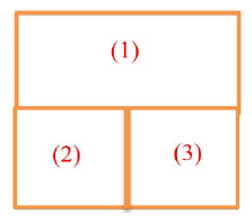
Lời giải
Đáp án đúng là D
Phương pháp giải
Sử dụng công thức tính nhiệt lượng: Q = mcΔt
Phương trình cân bằng nhiệt: Qtỏa = Qthu
Lời giải
Diện tích tiếp xúc của từng cặp chất lỏng trong bài toàn là như nhau
Vậy nhiệt lượng truyền qua giữa chúng tỉ lệ với hiệu nhiệt độ với cùng một hệ số tỉ lệ là k
Ngăn 1 tỏa nhiệt sang ngăn 2 là Q12 = k(t1− t2)
Ngăn 1 tỏa nhiệt sang ngăn 3 là Q13 = k(t1 −t3)
Ngăn 2 tỏa nhiệt sang ngăn 3 là Q23 = k(t2 − t3)
Phương trình cân bằng nhiệt:
Ngăn 1 có \({Q_{12}} + {Q_{13}} = 2mc\Delta {t_1} \Rightarrow k\left( {2{t_2} - {t_2} - {t_3}} \right) = 2mc\Delta {t_1}\)
Ngăn 2 có \({Q_{12}} - {Q_{13}} = mc\Delta {t_2} \Rightarrow k\left( {{t_1} - 2{t_2} + {t_3}} \right) = mc\Delta {t_2}\)
Ngăn 3 có \({Q_{13}} + {Q_{23}} = mc\Delta {t_3} \Rightarrow k\left( {{t_1} + {t_2} - 2{t_3}} \right) = mc\Delta {t_3}\)
\( \Rightarrow \frac{{2{t_1} - {t_2} - {t_3}}}{{2\Delta {t_1}}} = \frac{{{t_1} - 2{t_2} + {t_3}}}{{\Delta {t_2}}} = \frac{{{t_1} + {t_2} - 2{t_3}}}{{\Delta {t_3}}}\)
\( \Rightarrow \frac{{2.65 - 35 - 20}}{{2.1}} = \frac{{65 - 2.35 + 20}}{{\Delta {t_2}}} = \frac{{65 + 35 - 2.20}}{{\Delta {t_3}}}\)
\[ \Rightarrow \Delta {t_2} = 0,{4^0}C\] và \[\Delta {t_3} = 1,{6^0}C\].

Lời giải
Bạn cần đăng ký gói VIP ( giá chỉ từ 250K ) để làm bài, xem đáp án và lời giải chi tiết không giới hạn.
Lời giải
Bạn cần đăng ký gói VIP ( giá chỉ từ 250K ) để làm bài, xem đáp án và lời giải chi tiết không giới hạn.
Câu 5
Lời giải
Bạn cần đăng ký gói VIP ( giá chỉ từ 250K ) để làm bài, xem đáp án và lời giải chi tiết không giới hạn.
Câu 6
Lời giải
Bạn cần đăng ký gói VIP ( giá chỉ từ 250K ) để làm bài, xem đáp án và lời giải chi tiết không giới hạn.
Lời giải
Bạn cần đăng ký gói VIP ( giá chỉ từ 250K ) để làm bài, xem đáp án và lời giải chi tiết không giới hạn.
 Nhắn tin Zalo
 Hỏi bài tập