






















1. Peer pressure is a term describing the pressure exerted by a peer group in encouraging a person to change their attitude, behavior and/or morals, to conform to, for example, the group’s actions, fashion sense, taste in music and television, or outlook on life. Social groups affected include membership groups, when the individual is "formally" a member (for example, a political party or trade union), and social cliques. A person affected by peer pressure may, or may not want to, belong to these groups. They may also recognize dissociative groups with which they would not wish to associate, and thus they behave adversely concerning that group's behaviors.
2. A young person can experience peer pressure in varying degrees. Sometimes their peers may proactively influence them to behave in certain ways and at other times they may be just following along. Both of these situations are based on seeking approval, but it is also possible for peer pressure to be a result of bullying. This is when your child fears being teased or physically hurt for not conforming.
3. There are two types of peer pressure: positive and negative. Positive peer pressure is when someone tries to help you change something about yourself for the better, and negative peer pressure is the opposite.
4. Peer pressure is most commonly associated with youth, in part because most youth spend large amounts of time in schools and other fixed groups that they do not choose and are seen as lacking the maturity to handle pressure from friends. Also, young people are more willing to behave negatively towards those who are not members of their own peer groups. Negative peer pressure can also affect mental health. It can decrease self-confidence and lead to poor academic performance, distancing from family members and friends, or an increase in depression and anxiety. Left untreated, this could eventually lead teens to engage in self-harm or have suicidal thoughts.
5. Peer pressure can also have positive effects when people are pressured toward positive behavior, such as volunteering for charity or excelling in academics or athletics, by their peers. This is most commonly seen in youths who are active in sports or other extracurricular activities where conformity with one's peer group is strongest.
1. Peer pressure is a term describing the pressure exerted by a peer group in encouraging a person to change their attitude, behavior and/or morals, to conform to, for example, the group’s actions, fashion sense, taste in music and television, or outlook on life. Social groups affected include membership groups, when the individual is "formally" a member (for example, a political party or trade union), and social cliques. A person affected by peer pressure may, or may not want to, belong to these groups. They may also recognize dissociative groups with which they would not wish to associate, and thus they behave adversely concerning that group's behaviors.
2. A young person can experience peer pressure in varying degrees. Sometimes their peers may proactively influence them to behave in certain ways and at other times they may be just following along. Both of these situations are based on seeking approval, but it is also possible for peer pressure to be a result of bullying. This is when your child fears being teased or physically hurt for not conforming.
3. There are two types of peer pressure: positive and negative. Positive peer pressure is when someone tries to help you change something about yourself for the better, and negative peer pressure is the opposite.
4. Peer pressure is most commonly associated with youth, in part because most youth spend large amounts of time in schools and other fixed groups that they do not choose and are seen as lacking the maturity to handle pressure from friends. Also, young people are more willing to behave negatively towards those who are not members of their own peer groups. Negative peer pressure can also affect mental health. It can decrease self-confidence and lead to poor academic performance, distancing from family members and friends, or an increase in depression and anxiety. Left untreated, this could eventually lead teens to engage in self-harm or have suicidal thoughts.
5. Peer pressure can also have positive effects when people are pressured toward positive behavior, such as volunteering for charity or excelling in academics or athletics, by their peers. This is most commonly seen in youths who are active in sports or other extracurricular activities where conformity with one's peer group is strongest.
What is the passage mainly about?
B. How to resist negative peer pressure.
Quảng cáo
Trả lời:
 Giải bởi Vietjack
Đáp án
Effects of peer pressure.
Giải thích
How peer pressure works: Áp lực đồng trang lứa hoạt động như thế nào.
How to resist negative peer pressure: Làm thế nào để chống lại ảnh hưởng tiêu cực từ áp lực đồng trang lứa.
Definition of peer pressure: Định nghĩa của áp lực đồng trang lứa.
Effects of peer pressure: Các tác động của áp lực đồng trang lứa.
Các đoạn đều nói về sự ảnh hưởng của áp lực đồng trang lứa ở mọi cấp độ và khía cạnh.
A young person can experience peer pressure in varying degrees.
There are two types of peer pressure: positive and negative.
Negative peer pressure can also affect mental health.
Peer pressure can also have positive effects when people are pressured
Câu hỏi cùng đoạn
Câu 2:
In paragraph 1, who or what does the word “they” refer to?
In paragraph 1, who or what does the word “they” refer to?
Giải bởi Vietjack
Đáp án
People affected by peer pressure
Giải thích
Trích dẫn: “A person affected by peer pressure may, or may not want to, belong to these groups. They may also recognize dissociative groups with which they would not wish to associate, and thus they behave adversely concerning that group's behaviors.”
Dịch: “Một người bị ảnh hưởng bởi áp lực bạn bè có thể hoặc không muốn thuộc về các nhóm này. Họ cũng có thể nhận ra các nhóm phân ly mà họ không muốn liên kết, và do đó họ cư xử bất lợi liên quan đến hành vi của nhóm đó.
Như vậy đại từ “they” chính là những người bị áp lực trang lứa.
Câu 3:
According to the passage, what is the negative effect of peer pressure?
Giải bởi Vietjack
Đáp án
It can lead to high stress levels, negative behavior. (2)
Giải thích
(1) Nó có thể khiến bạn uống rượu hoặc dùng ma túy, trốn học…
(2) Nó có thể dẫn đến mức độ căng thẳng cao, hành vi tiêu cực.
(3) Bạn có thể đánh mất lối sống của mình và hoàn toàn chấp nhận cách sống của bạn bè.
(4) Nó có thể khiến bạn làm theo những gì đồng nghiệp của bạn cảm thấy đúng.
Trích dẫn: “Negative peer pressure can also affect mental health. It can decrease self-confidence and lead to poor academic performance, distancing from family members and friends, or an increase in depression and anxiety. Left untreated, this could eventually lead teens to engage in self-harm or have suicidal thoughts.”
Dịch: “Áp lực tiêu cực từ bạn bè cũng có thể ảnh hưởng đến sức khỏe tinh thần. Nó có thể làm giảm sự tự tin và dẫn đến kết quả học tập kém, xa cách các thành viên trong gia đình và bạn bè, hoặc gia tăng trầm cảm và lo lắng. Nếu không được điều trị, điều này cuối cùng có thể khiến thanh thiếu niên tự làm hại bản thân hoặc có ý định tự tử.”
Vậy tóm lại sự ảnh hưởng tiêu cực của áp lực đồng trang lứa là tăng áp lực và những hành vi tiêu cực như học hành kém, xa cách các thành viên trong gia đình, trầm cảm,…
Câu 4:
In paragraph 4, what is the word “depression” closest in meaning to?
In paragraph 4, what is the word “depression” closest in meaning to?
Giải bởi Vietjack
Đáp án
unhappiness
Giải thích
depression = unhappiness (N): phiền muộn, trầm cảm…
fear (n): lo ngại, nỗi sợ.
hazard (n): nguy hiểm.
harmless (adj): vô hại
Inclement (adj): nghiêm khắc, khắc nghiệt
Câu 5:
According to the passage, what is the expression of peer pressure?
According to the passage, what is the expression of peer pressure?
Giải bởi Vietjack
Đáp án
Changing music style to conform to the group’s actions.
Giải thích
Trích dẫn: “Peer pressure is a term describing the pressure exerted by a peer group in encouraging a person to change their attitude, behavior and/or morals, to conform to, for example, the group’s actions, fashion sense, taste in music and television, or outlook on life.”
Dịch: “Áp lực đồng trang lứa là một thuật ngữ mô tả áp lực do một nhóm đồng đẳng gây ra trong việc khuyến khích một người thay đổi thái độ, hành vi và/hoặc đạo đức của họ, để phù hợp với hành động của nhóm, ví dụ: phong cách thời trang, sở thích âm nhạc và truyền hình, hoặc quan niệm về cuộc sống.”
Như vậy áp lực đồng trang lứa được định nghĩa là áp lực do một nhóm đồng đẳng gây ra trong việc khuyến khích một người thay đổi thái độ, hành vi và/hoặc đạo đức của họ, để phù hợp với hành động của nhóm. Vậy việc thay đổi phong cảnh âm nhạc để phù hợp với hoạt động của nhóm là một ví dụ.
Hot: Giáo án năng lực số, PPT AI khởi động lớp 1-12 (Update 2026) (chỉ từ 150k). Tải ngay
CÂU HỎI HOT CÙNG CHỦ ĐỀ
Câu 1
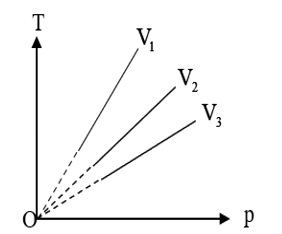
C. V3 < V2 < V1.
Lời giải
Đáp án
V3 < V2 < V1.
Giải thích
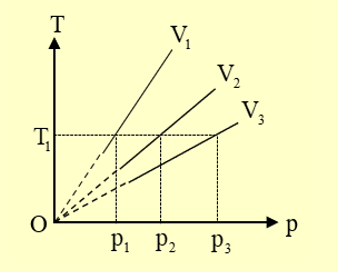
Ứng với nhiệt độ T1 ta có: p1 < p2 < p3
Do nhiệt độ không đổi, áp dụng định luật Boyle, ta có:
\({p_1}{V_1} = {p_2}{V_2} = {p_3}{V_3} \to {V_1} > {V_2} > {V_3}\).
Lời giải
Đáp án
80.
Giải thích
Ta có: \(\left( {{3^{2x + 1}} + {{2.3}^x} - 1} \right)\left( {{3^x} - y} \right) \le 0 \Leftrightarrow \left[ {3.{{\left( {{3^x}} \right)}^2} + {{2.3}^x} - 1} \right]\left( {{3^x} - y} \right) \le 0\)
\( \Leftrightarrow \left( {{3^x} + 1} \right)\left( {{{3.3}^x} - 1} \right)\left( {{3^x} - y} \right) \le 0 \Leftrightarrow \left( {{3^{x + 1}} - 1} \right)\left( {{3^x} - y} \right) \le 0\) (do \({3^x} + 1 > 0,\forall x\)).
TH1. \({3^{x + 1}} - 1 \le 0 \Rightarrow x + 1 \le 0 \Leftrightarrow x \le - 1\) ta có \({3^x} - y \ge 0 \Rightarrow y \le {3^x} \le {3^{ - 1}} = \frac{1}{3}\) (vô lý vì \(y\) là số nguyên dương).
TH2. \({3^{x + 1}} - 1 \ge 0 \Rightarrow x + 1 \ge 0 \Leftrightarrow x \ge - 1\) ta có \({3^x} - y \le 0 \Rightarrow y \ge {3^x} \ge {3^{ - 1}} = \frac{1}{3}\) (luôn đúng vì \(y\) là số nguyên dương).
Để ứng với mỗi số \(y\) có không quá 5 số nguyên \(x\) thỏa mãn bất phương trình nên nghiệm \(x\) chỉ nằm trong khoảng \(\left\{ { - 1;0;1;2;3} \right\} \Rightarrow y < {3^4} = 81\).
Vậy có 80 số nguyên dương \(y\) thỏa mãn yêu cầu đề bài.
Câu 3
Lời giải
Bạn cần đăng ký gói VIP ( giá chỉ từ 250K ) để làm bài, xem đáp án và lời giải chi tiết không giới hạn.
Câu 4
Lời giải
Bạn cần đăng ký gói VIP ( giá chỉ từ 250K ) để làm bài, xem đáp án và lời giải chi tiết không giới hạn.
Câu 5
Lời giải
Bạn cần đăng ký gói VIP ( giá chỉ từ 250K ) để làm bài, xem đáp án và lời giải chi tiết không giới hạn.
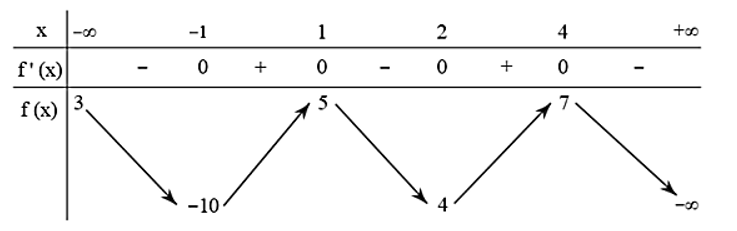
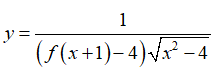
Lời giải
Bạn cần đăng ký gói VIP ( giá chỉ từ 250K ) để làm bài, xem đáp án và lời giải chi tiết không giới hạn.
Lời giải
Bạn cần đăng ký gói VIP ( giá chỉ từ 250K ) để làm bài, xem đáp án và lời giải chi tiết không giới hạn.
 Nhắn tin Zalo
 Hỏi bài tập